In Tarbaj, Wajir County, a Child Survival visit found SAM and a zero-dose child in the same house. The boy gained weight. He is not “finished.” Neither is Wajir.
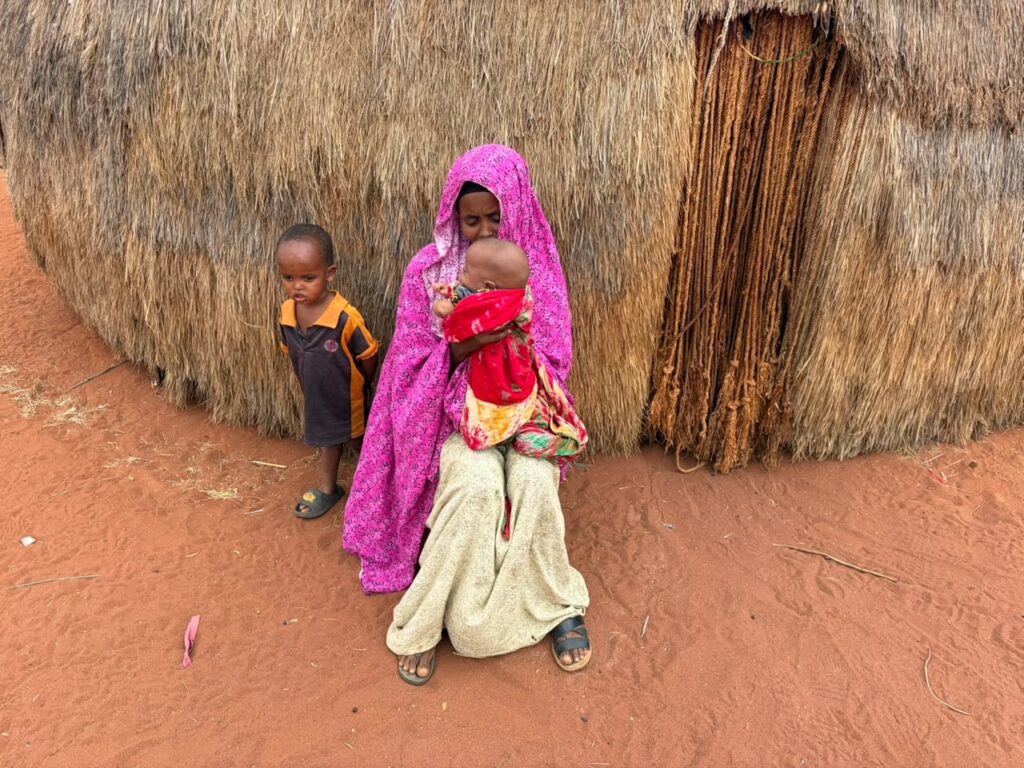
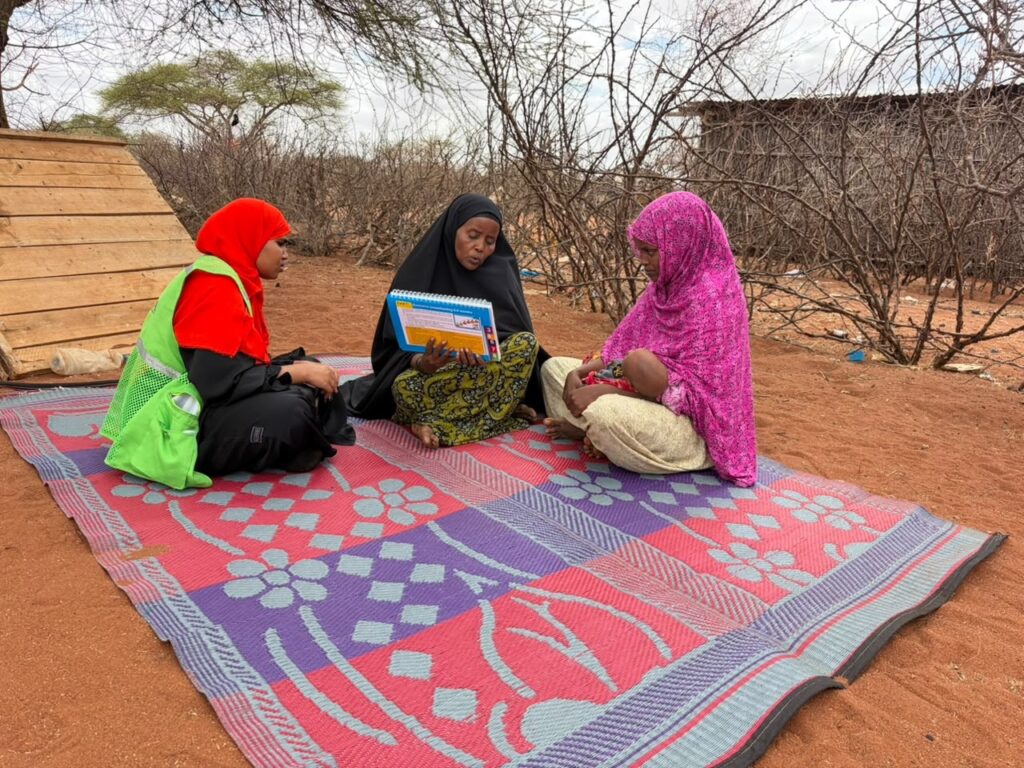
A Community Health Promoter in Tarbaj did two ordinary things. She pulled a MUAC tape. She opened a booklet.
The eight-month-old measured 11.0 cm and weighed 7.9 kg. That is severe acute malnutrition: wasted, poor appetite, not playing. In the same homestead another child’s booklet had no antigens. Zero-dose.
For health and nutrition, that is one problem. The same distance that kept the child off OTP kept him off the schedule. Infection and hunger travel together. A wasted child who is unvaccinated is at higher risk of measles, diarrhoea and pneumonia. A vaccinated child who is still wasted has not been reached.
What Wajir is actually carrying
This is not a rare household. It is the county load.
January 2026 SMART: GAM 19.2 percent, SAM 3.7 percent — above the WHO emergency threshold of 15 percent. IPC: 64,551 children aged 6–59 months need treatment. After a failed short-rains season, 274,500 people were in food Crisis or worse. Milk — the first food for many pastoral children — had thinned. Among pregnant and breastfeeding women, 4.5 percent had MUAC under 21 cm. The assessment noted no targeted nutrition package for that group.
KDHS 2022: wasting 23 percent in Wajir against 5 percent nationally. Fully vaccinated at 12–23 months: 49 percent against 80 percent. Zero-dose in that age band: 33.8 percent. Four or more ANC visits: 45 percent. Skilled delivery: 57 percent. Under-five mortality: 57 per 1,000 against 41 nationally.
Those numbers explain the visit. They do not disappear because one child improved.
What the project actually did
Mama Asli — a mother, used with consent — living in a hard-to-reach settlement in Tarbaj, with a household of ten. Livestock livelihood. Four children under five. She is pregnant.
RACIDA’s Child Survival project with Wajir’s Department of Health runs a continuum, not a single day.
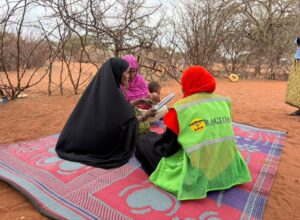
First, BFCI mapping: the CHP finds SAM and missing antigens at home. Second, referral to integrated outreach: OTP and nutrition follow-up, catch-up immunization, Vitamin A, deworming, IYCF counselling, growth monitoring and ANC on one site. Third, OTP plus stimulation: therapeutic feeding and age-appropriate play, because wasting is medical and developmental. Fourth, the county zero-dose and under-immunized campaign: catch-up for the blank booklet and missed doses. Across 17 facilities that campaign delivered 6,508 vaccine and Vitamin A doses. Fifth, household follow-up: siblings screened, mother in a Mother-to-Mother Support Group, ANC for the pregnancy.
By nine months the index child measured 12.8 cm and weighed 10.1 kg. Appetite improved. He had begun to play.
That is a real gain: +1.8 cm MUAC, +2.2 kg. At 12.8 cm he has crossed the usual SAM and MAM MUAC cut-offs. He is not discharged from risk. The case file said he remains nutritionally vulnerable and needs continued follow-up. Drought, infection and a thin household diet can put him back on the tape. OTP follow-up exists for that reason.
Catch-up immunization is also not one injection. Zero-dose means the full schedule still has to be built: first antigens, return dates, later doses. Three other children in the house had missed vaccines. They were started. Completion depends on the next outreach, not the first.
A mother, and the limits of a visit
Distance was the barrier she named. Transport first, then the walk.
“When my child was first identified, he was very weak. He was not eating enough, he was not playing and he was always crying. I was very worried because I did not know what was wrong with him.”
“Before the outreach, getting health services was difficult. We lived far from the services, and whenever a child became sick, I worried about the cost of transportation and sometimes we had to walk long distances.”
“The CHPs came to my household and identified my child. They referred us for treatment, and I continued bringing my child for nutrition follow-up. Now he is stronger, he is eating better and he has started playing again.”
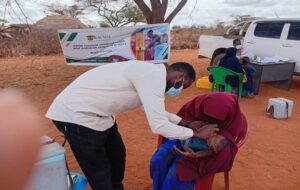
Counselling gave her what a facility day does not: the ten food groups, complementary feeding, handwashing before preparing food. She joined an M2MSG. She started ANC. She referred six other women for ANC.
That last point matters in a county where fewer than half of women complete four antenatal visits. It does not replace a midwife or a theatre. It means one more pregnant woman may arrive before a crisis.
She cannot rain. She cannot put milk back in the herd. She cannot move the facility closer. Those are county and climate constraints. The project shortens the walk. It does not remove Wajir.
“I have learned about the different food groups and how to give my children age-appropriate complementary foods. I now understand that children need a diverse diet, not just one type of food.”
“What I have learned, I also share with other mothers. I have already referred six mothers to ANC because I want them to benefit from these services too.”
“Before, I was worried about my child. Now I have hope because I understand how to feed my children, when to seek services and how to protect them.”
What the coverage figures do and do not say
Where outreach holds, SMART 2026 shows BCG 99.2 percent, OPV3 97.8 percent, measles at nine months 96.3 percent. The Short Rains Assessment attributes that to scaled-up integrated outreaches and names RACIDA among partners supporting the Department of Health.
Vitamin A is 75.4 percent — still below the 80 percent national target, with the gap widest in children 6–11 months and in two-dose completion. In Eldas, a 2024 study found only 69.8 percent of children aged 2–5 fully vaccinated. Distance was the first reason.
High antigen coverage in a survey and a 33.8 percent zero-dose figure from 2022 can sit in the same county: one is what outreach is now reaching; the other is the backlog the campaign is still working off. Neither is a claim that every child in Tarbaj is protected.
The result
A wasted, unvaccinated household was found at home.
The wasted child gained 2.2 kg and 1.8 cm of MUAC and began to play.
The zero-dose child entered the schedule.
The mother is on ANC and has sent six women after her.
The boy is still in follow-up.
That is a health and nutrition result. It is not a county turnaround. Wajir is still in nutrition emergency. Vitamin A is short. Default will rise if the outreach calendar slips. A kitchen garden planned for the M2MSG will help only if there is water and the group keeps meeting.
Child survival here is follow-up. The booklet has writing in it. The tape must be used again.
RACIDA Child Survival Centred Health and Nutrition Response. RACIDA with the County Government of Wajir, Department of Health. Tarbaj Sub-County.
Mama Asli is a beneficiary with informed consent.
Sources: consented household file; SMART and Short Rains Assessment, January 2026; IPC 2026; KDHS 2022.
Photos from the Tarbaj Child Survival case file.