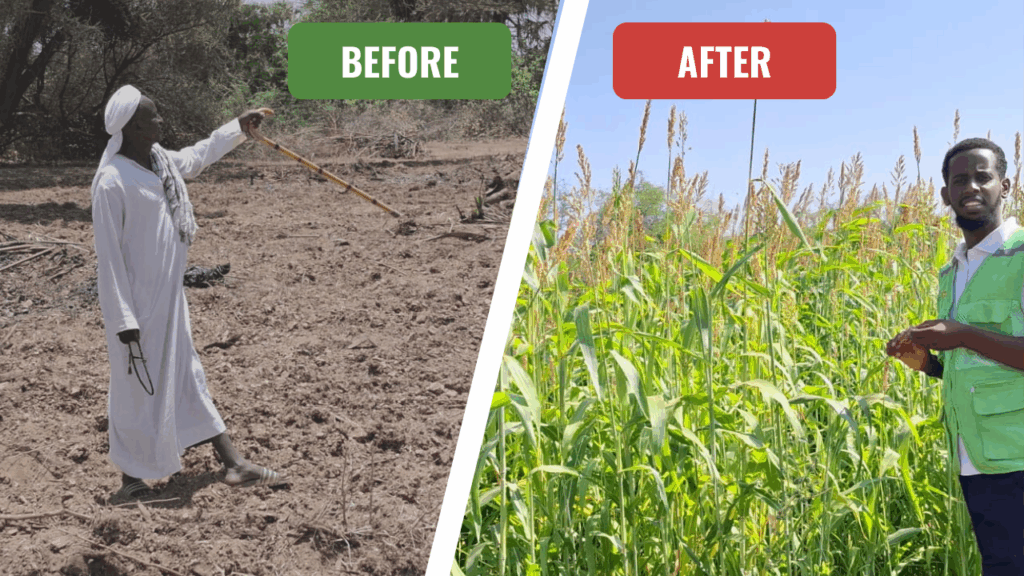
Mandera farmers who once saw their lands degraded and unproductive are now reviving their farms and livelihoods, thanks to climate-resilient practices facilitated by RACIDA through the BORESHA NABAD project.
In a region long affected by recurring droughts, invasive species, and land degradation, these efforts are bringing renewed hope and tangible change.
During recent field follow-ups, RACIDA assessed progress in land reclamation, fodder production and climate-smart agriculture. These activities are boosting food security, livestock health, and community resilience.
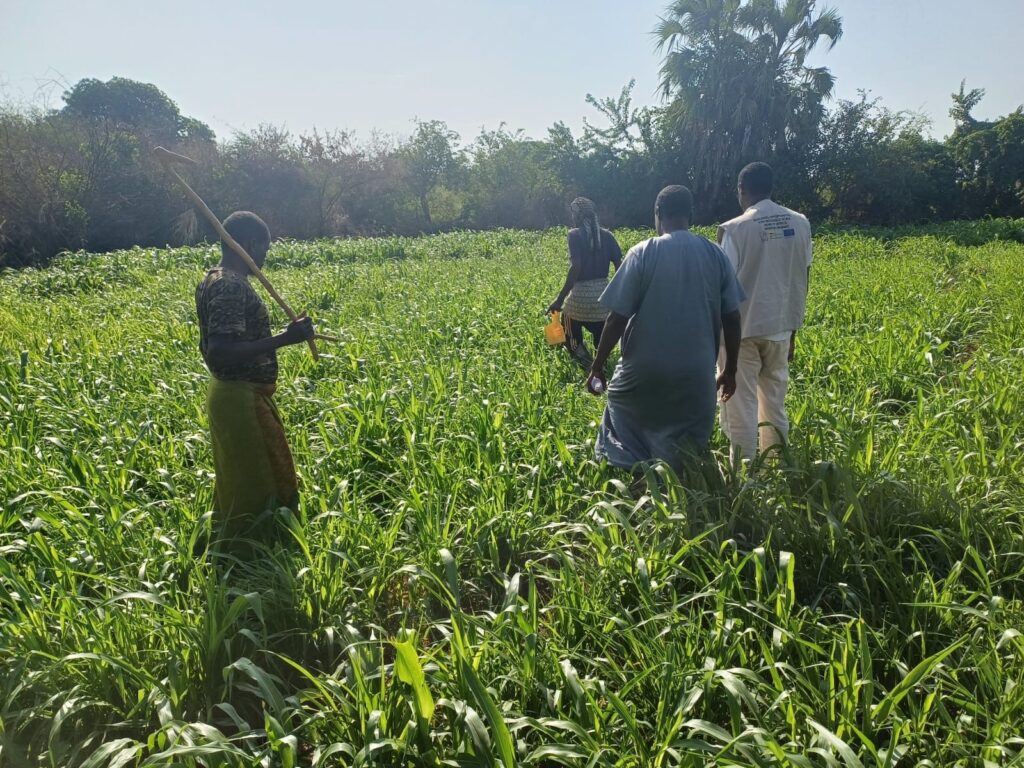
A key milestone has been reclaiming farmlands once overrun by invasive species. Farmers are now planting drought-tolerant, high-yield seeds distributed through the project, ensuring consistent production even during dry spells.
Central to this success is the Market Systems Development (MSD) approach, which links farmers directly to agrovet suppliers. Through RACIDA-facilitated trainings, farmers now access quality farm inputs and are becoming more self-reliant and entrepreneurial.
Fodder production, especially seed bulking, is also gaining ground. With livestock as the backbone of pastoralist communities, a reliable supply of quality fodder helps reduce the harsh impacts of drought and strengthens household resilience.
These interventions cover nine sites across Mandera County: Neboi, Fikow, Bur Abor, Khalalio, Meygag, Shantoley, Girisa, Kalicha/Mado, and Garse—turning them into hubs of innovation and sustainable practices.
RACIDA also strengthened Disaster Risk Reduction (DRR) committees, ensuring local preparedness and safeguarding progress made.
Through BORESHA NABAD, RACIDA is showing how integrated, market-driven solutions can restore degraded lands, improve food security, and create lasting resilience. Once-barren farms now stand as symbols of hope and determination, proving that with the right support, Mandera communities can overcome even the toughest challenges.