Mandera County | 8 January 2026
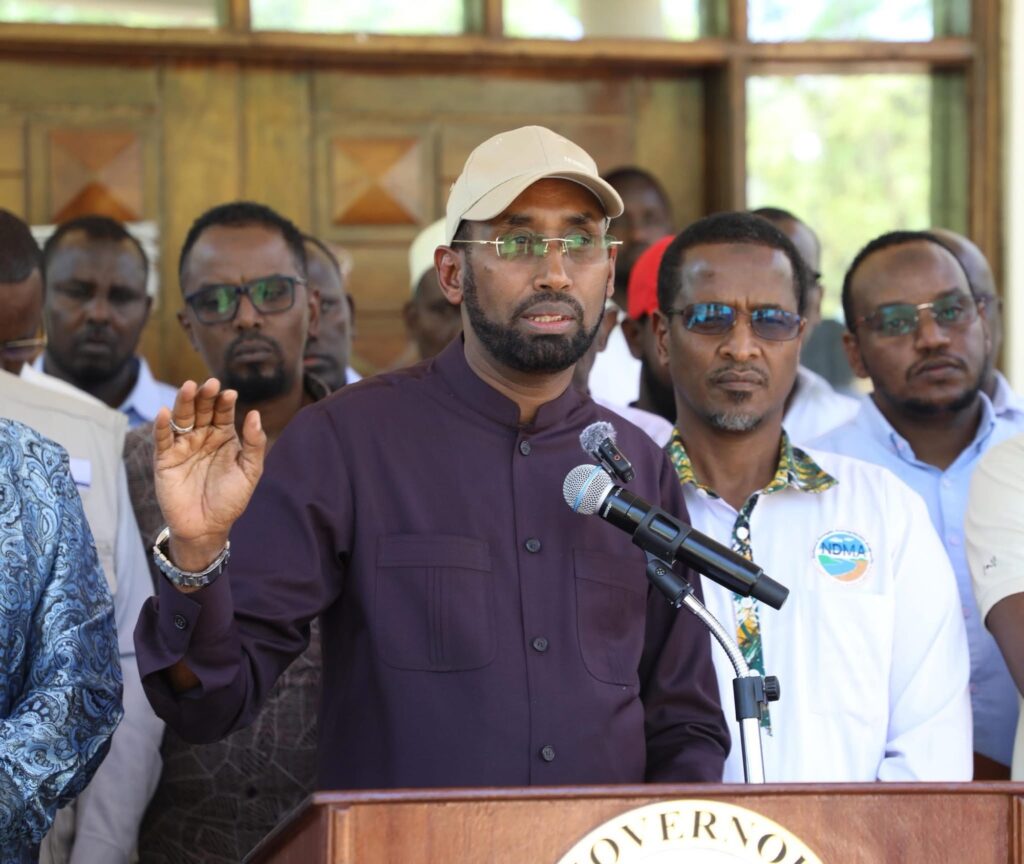
Mandera County leadership led by Governor Mohamed Khalif address the media following the County Steering Group (CSG) meeting on the drought response.
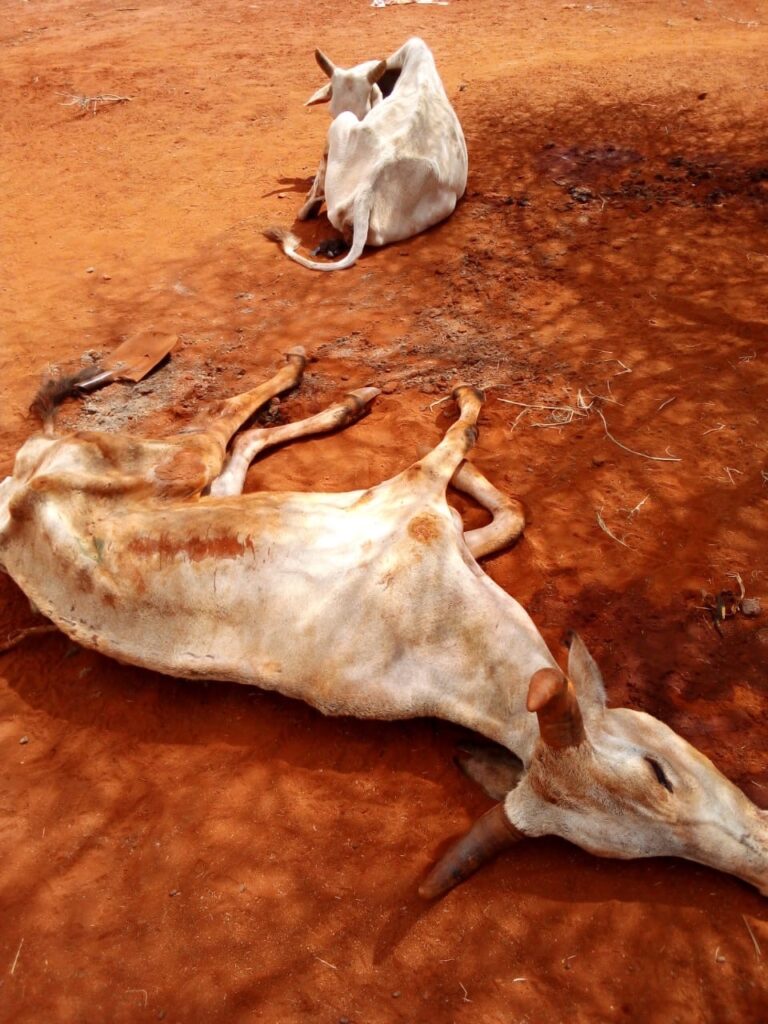
Mandera County continues to face a severe and worsening drought, driven by consecutive seasons of below-average rainfall, prolonged dry spells, and poor rainfall distribution. The county is currently classified under the Alarm drought phase, with conditions deteriorating rapidly and placing lives and livelihoods at serious risk.
The prolonged drought has significantly constrained the regeneration of pasture and water resources across the county. Livestock are trekking longer distances in search of water and grazing, resulting in declining body conditions, reduced milk production, and increased livestock stress. These impacts have directly weakened household purchasing power and undermined food and nutrition security—particularly among children under five, pregnant and lactating women, older persons, and persons with disabilities.
Current estimates indicate that over 335,000 people in Mandera County require humanitarian assistance, with 47,950 people classified in IPC Phase 4 (Emergency) and a further 287,700 people in IPC Phase 3 and above. In addition, increased livestock migration within Mandera County and into neighbouring Wajir County has intensified pressure on scarce resources, heightening the risk of resource-based conflict.
Coordinated Government and Partner Response
In response to the escalating situation, the County Government of Mandera, National Government institutions, and humanitarian partners convened a County Steering Group (CSG) meeting to review the drought outlook and align response actions. The meeting reaffirmed a shared commitment to safeguarding lives and livelihoods through a coordinated, multi-sectoral response.
Key interventions currently underway across Mandera County include:
Water trucking to 266 sites (203 domestic and 63 livestock sites) using 33 water bowsers, led by the County Government. Emergency borehole drilling, repair, and equipping, with 39 boreholes drilled, 24 equipped and operational, and 15 currently being equipped. Fuel support for water trucking and strategic boreholes provided by the National Drought Management Authority (NDMA). Food assistance, including the distribution of 15,000 bags of rice and 13,000 bags of beans by the State Department for Special Programmes. Integrated health, nutrition, and WASH outreaches, including mass nutrition screening and disease surveillance. Livestock vaccination and treatment campaigns, implemented jointly by the County Government and RACIDA. Cash transfers under the Hunger Safety Net Programme (HSNP), reaching 22,107 households, to stabilize household purchasing power. Cash and nutrition support for malnourished children, delivered by the Kenya Red Cross Society and RACIDA.
RACIDA’s Cash Assistance and Livelihood Response
As part of the broader humanitarian response, RACIDA is implementing a large-scale mobile cash transfer intervention targeting the most vulnerable drought- and conflict-affected households across Mandera County.
From January to March 2026, RACIDA will reach 7,943 households with mobile cash assistance, supported by the State Department (USG/OFA), Diakonie Katastrophenhilfe (DKH), and ACTED, with a total value of KES 191.5 million. The intervention includes:
6,385 households receiving KES 8,645 per month for three months. 384 households receiving KES 12,277 for two cycles under a cross-border emergency response. 724 households receiving KES 11,412 for two months under the Kenya Cash Consortium response.
In parallel, RACIDA is distributing Non-Food Items (NFIs) to 1,250 households, addressing critical household gaps and reinforcing dignity and protection outcomes.
RACIDA is also supporting livestock health interventions, including vaccination and treatment, to protect pastoral livelihoods and reduce further asset depletion.
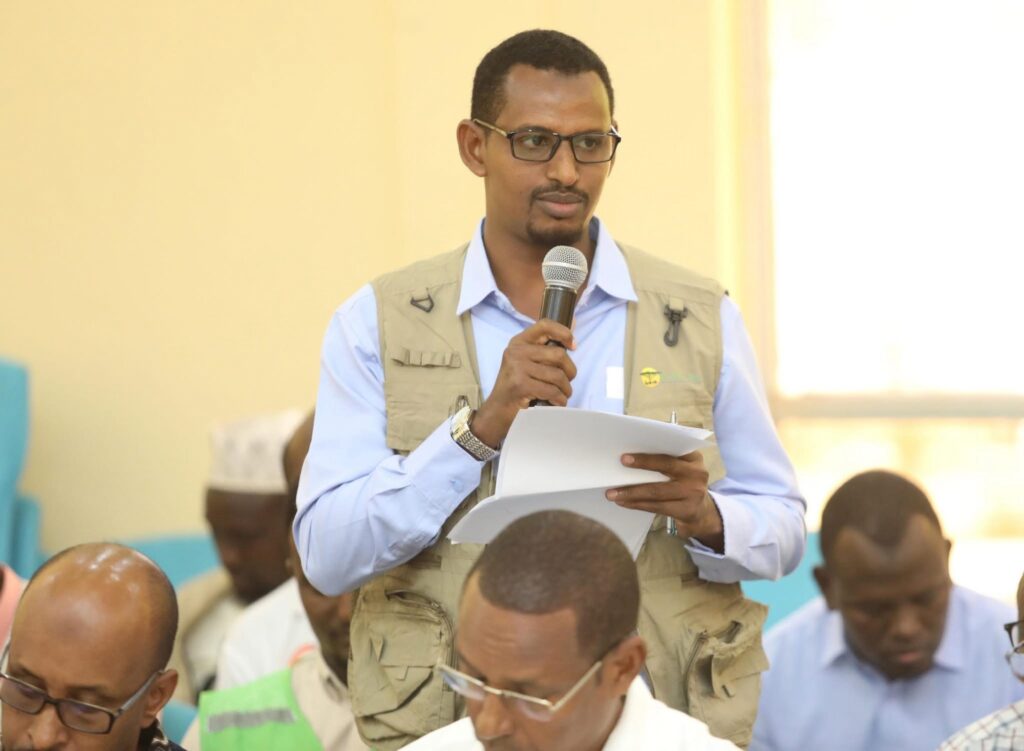
RACIDA Project Manager Abdisalan Muthow, outlining RACIDA’s drought response interventions during the County Steering Group (CSG) meeting.
Additional Ongoing and Planned Interventions
Other response measures currently underway or planned include:
Distribution of food to 67,000 households by the County Government. Procurement of 7,280 bags of livestock drought pellets by NDMA. World Food Programme (WFP) cash transfers reaching 7,992 households at KES 7,000 per household per month. Distribution of 8,064 bags of range cubes by FAO. Initiation of World Bank–supported livestock feed and water interventions, including a KES 20 million revolving fund for crop residues and fodder.
Emerging Risks and Priority Actions
If current conditions persist, Mandera County faces heightened risks of livelihood asset depletion, worsening malnutrition, and increased competition over scarce resources, with potential implications for peace and security.
To mitigate further deterioration, stakeholders have prioritised actions across key sectors, including:
Scaling up cash assistance and food support for vulnerable households. Expanding water trucking, borehole rehabilitation, and fuel support. Increasing emergency livestock feed, veterinary services, and destocking measures. Strengthening integrated health, nutrition, and WASH services, including blanket supplementary feeding in severely affected areas. Supporting education continuity through school feeding and water provision. Enhancing peace and conflict-prevention mechanisms, including cross-border dialogue. Promoting climate-smart and irrigated agriculture to support longer-term resilience.
Commitment to Coordination and Resilience
RACIDA acknowledges the continued collaboration and support of humanitarian and development partners, including the World Food Programme, Kenya Red Cross Society, International Organization for Migration, Danish Refugee Council, Islamic Relief Worldwide, Concern Worldwide, OSDA, and others.
RACIDA remains committed to strengthening coordination, mobilising additional resources, and ensuring timely, targeted, and dignified assistance reaches the most affected communities. Working closely with County and National Government structures, RACIDA continues to balance life-saving response with early recovery and resilience-building to support communities across Mandera County through the current crisis and beyond.