BY AHMED HUSSEIN –
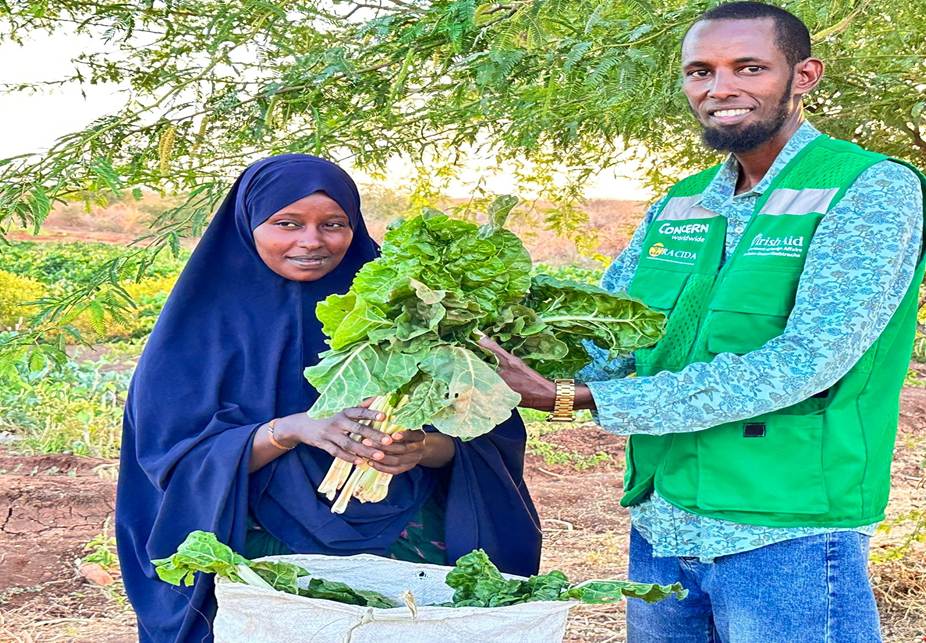
In Neboi, where prolonged drought has steadily eroded livelihoods, survival for many families is a daily struggle. For Rahma Nurow Mohamed, a 30-year-old mother of six, this reality was all too familiar. Although her family owned land, years of limited skills, inadequate inputs, and financial constraints meant it remained largely unproductive. Food insecurity and uncertainty defined everyday life, especially as climate shocks intensified.
That narrative began to change with the introduction of the HANAANO Project. Through practical Climate-Smart Agriculture training, Rahma gained hands-on skills suited to arid conditions, how to prepare and manage soil, conserve water, and grow crops resilient to drought. With access to certified seeds and basic farming tools, she began cultivating her own land for the first time. What was once idle soil slowly turned green, marking the beginning of a more stable future.
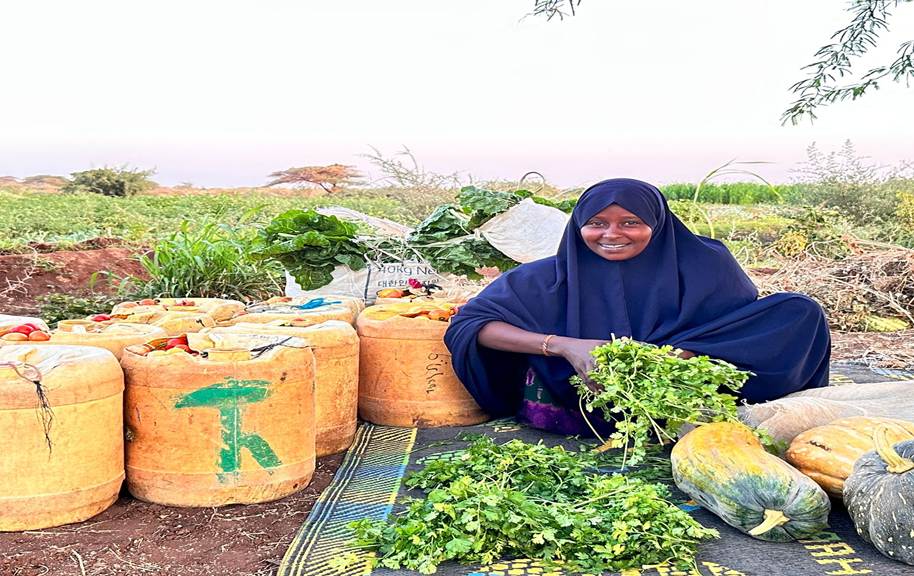
As the season progressed, Rahma’s efforts bore fruit. Tomatoes, leafy vegetables, and pumpkins flourished in her garden. Carefully harvested and stored, the produce first met her family’s food needs and then created surplus for sale. Rows of jerrycans filled with tomatoes became a powerful symbol of change, transforming labour into income and restoring control over household decisions. For Rahma, farming was no longer a gamble but a viable livelihood.
Ongoing support from project staff played a critical role in sustaining this progress. Regular follow-up visits and practical guidance helped Rahma refine her techniques, manage challenges, and improve yields despite persistent water stress. This close accompaniment ensured that training translated into real, lasting results on the ground.

The impact reached beyond income. Fresh vegetables became a regular part of family meals, improving dietary diversity and nutrition for her children. Food that once had to be purchased or skipped altogether was now grown at home, reducing expenses while strengthening household health and wellbeing.
Through her participation in a Village Savings and Loan Association (VSLA), Rahma began saving consistently and reinvesting in her farm. These savings strengthened her ability to plan ahead, absorb future shocks, and continue improving production without dependency. Step by step, Rahma moved from vulnerability to resilience.
Today, Rahma is not just coping with drought, she is managing risk, producing food, and shaping a more secure future for her family. Her journey is a powerful example of how targeted, well-sequenced donor support under the HANAANO Project is translating into sustainable, people-centered impact, empowering women and restoring dignity in drought-affected ASAL communities.