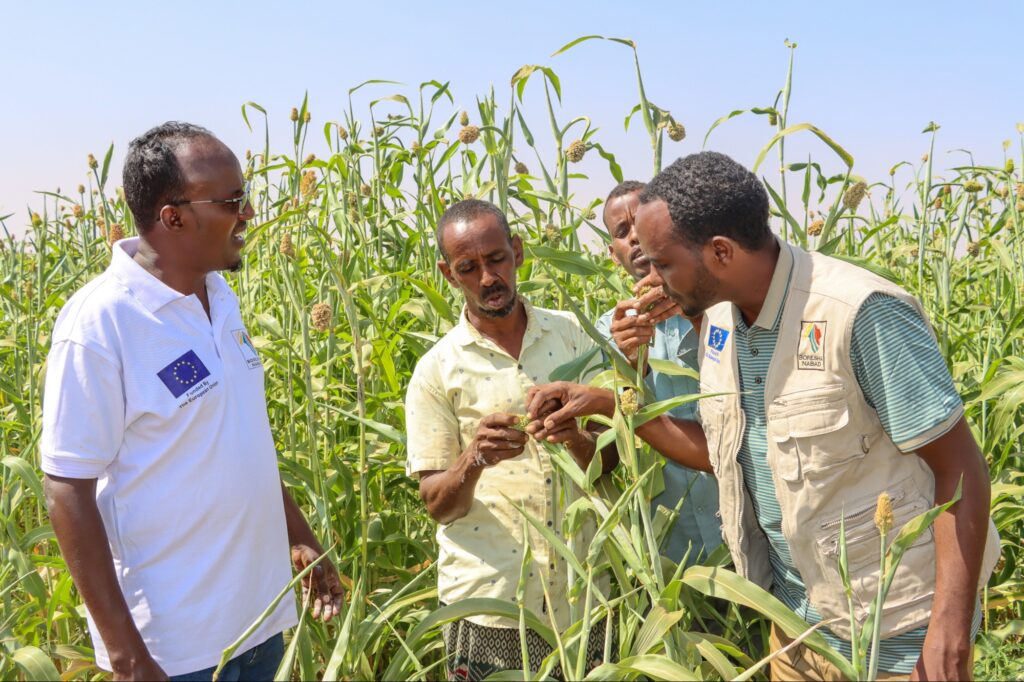
In Ethiopia’s borderlands, 260 hectares of land that once lay abandoned are back in production this season, supplying fodder and cereals to drought-affected agropastoral communities.
In Dollo Ado and surrounding areas, repeated drought, seasonal flooding and invasive Prosopis had rendered large tracts of farmland unproductive. Fields were left idle even as demand for cereals and livestock feed continued to rise in cross-border markets.
Farmers began to reassess what was possible.
With funding from the European Union, BORESHA-NABAD, through RACIDA and DRC Ethiopia, facilitated structured linkages between organised farmer groups and local agro-input suppliers, improving access to certified seeds and essential inputs. Communities were also supported in rehabilitating degraded land through mechanised bush-clearing, removal of invasive Prosopis, and land levelling to restore cultivable acreage.
As confidence between producers and traders strengthened, farmers began reinvesting in their land.
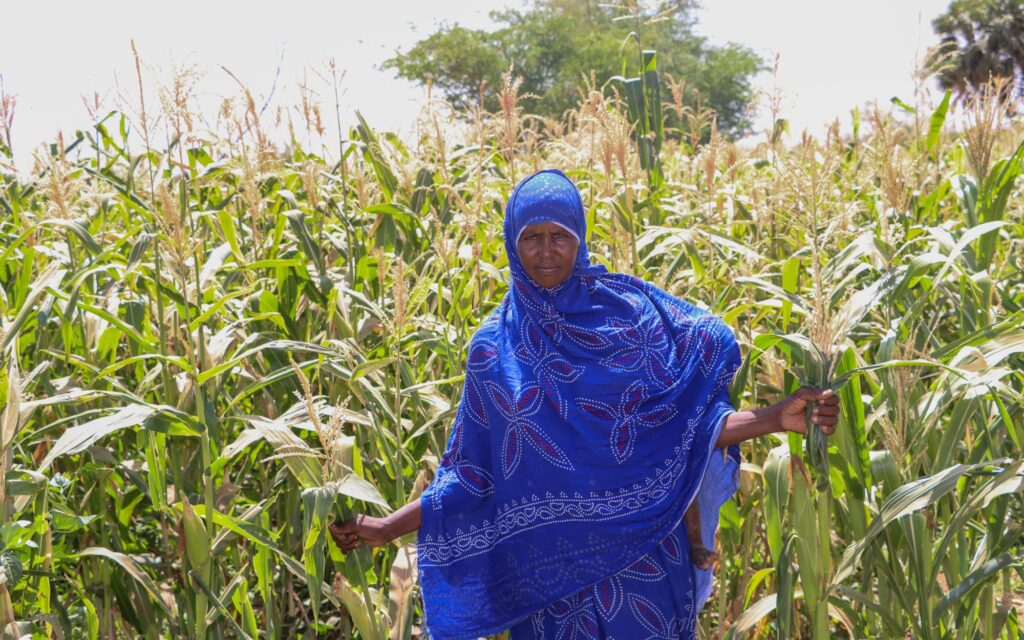
Today:
✔️ Sorghum, maize, beans and Sudan grass are cultivated across seven locations on reclaimed landscapes
🌾 Fodder production is strengthening local feed availability while generating steady income for farming households
🤝 Reliable engagement with agro-input suppliers is enabling farmers to sustain production beyond a single season
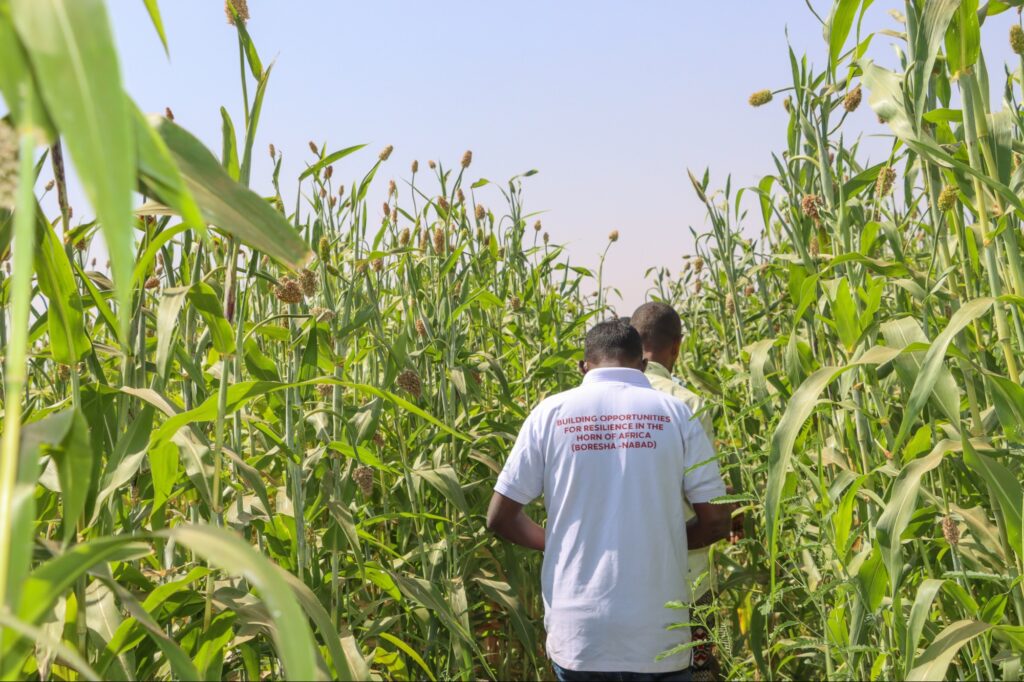
What was once idle land is now contributing to both human food supply and livestock productivity, strengthening household earnings in the process. This shift reflects farmers responding to climate-induced demand and practical cross-border market opportunities.
When conditions allow the enterprise to function, recovery becomes an investment.