Introduction
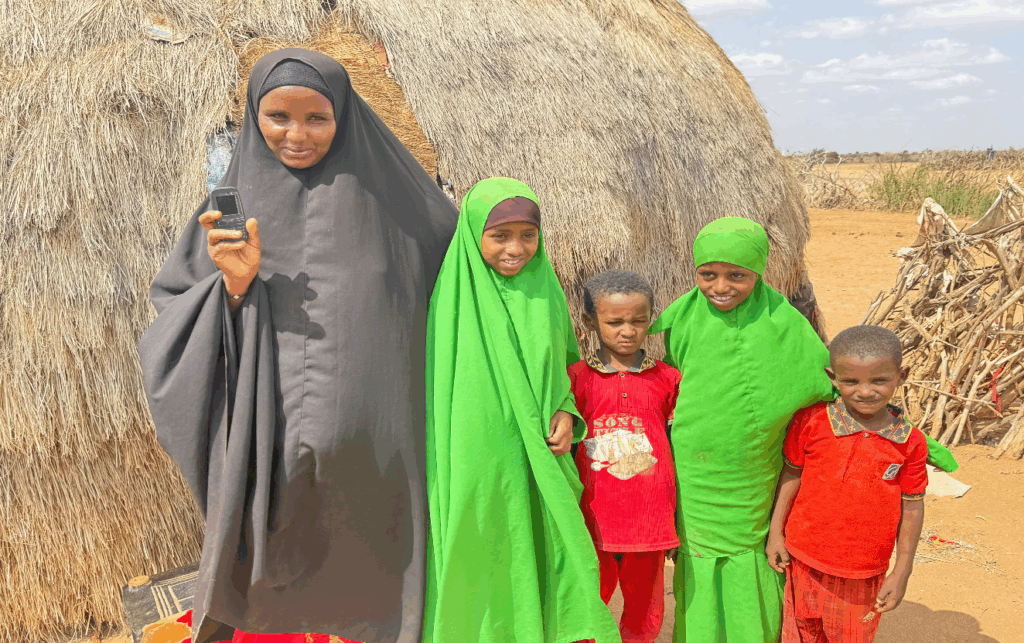
In the dusty plains of Wel Athi, Wajir County, Northeastern Kenya, a quiet recovery is underway. For years, this arid region has battled a cascade of crises—recurring droughts, floods, crop failure, dwindling livestock, and widespread food insecurity. Today, amid these persistent shocks, hundreds of vulnerable households are getting back on their feet. —thanks to simple unconditional cash assistance by RACIDA
With support from Diakonie Katastrophenhilfe (DKH), RACIDA is implementing the project “Enhancing Food Security, Nutrition, and Community Resilience in Wajir County”. A key component of this initiative is the provision of Unconditional Multi-Purpose Cash Assistance (UMPCA)—flexible financial support that enables families to meet their most pressing needs on their own terms.
Under this intervention, a total of 489 households across five locations—Gubat Onle, Ahmed Garweyne, Wel Athi (in Wajir West Sub-County), and Dalsan and Fororsa (in Tarbaj Sub-County)—are receiving KES 10,798 per cycle via M-PESA mobile money. Each household will receive support for three consecutive cycles. As of July 2025, two cycles have already been successfully disbursed, offering critical lifelines to some of the most drought-affected families in the region.
Mama Arabey Adan’s Case story.
Among those who have benefited from this support is Arabey Adan, a hardworking yet resilient mother of eight living in Wel Athi. Her thatched-roof home, though modest, is alive with the joyful sounds of children—four boys and four girls—whom she has raised alone after losing her husband. On top of raising eight orphaned children, Arabey also cares for her elderly mother, making her the sole provider for a large and vulnerable household.
Once, Arabey’s small flock of goats and a modest kiosk gave her some financial footing. But like many in the region, her livestock were devastated by the recent drought—the latest in a string of climate shocks that have eroded traditional livelihoods across Wajir. Her kiosk struggled as purchasing power declined, and mounting debts pushed her further into desperation.
Then came the cash assistance.
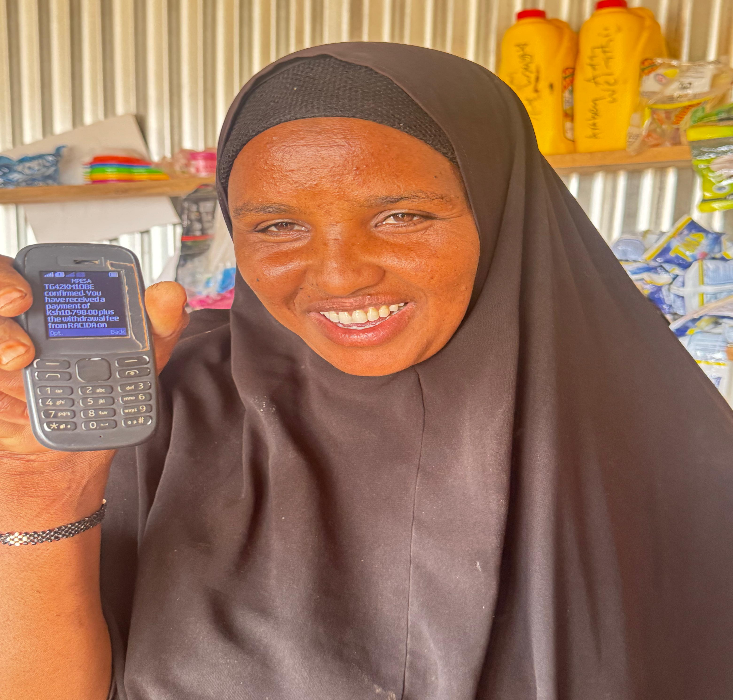
“I no longer borrow food on credit,” Arabey says, standing outside her home while holding up her phone, proudly showing the M-PESA message confirming her recent cash transfer.
“My children are back in school. We now eat with peace of mind.”
With the money, she has been able to pay for her children’s school and Quranic Dugsi fees, purchase food, and even begin to repay debts owed to local vendors. Her kiosk is slowly reviving, and the emotional toll of constantly having to ask for help is starting to ease.
Context of Crisis:
Wajir County, classified as an arid zone, is no stranger to hardship. Livestock production forms the backbone of household income for over 80% of the population in pastoral and agro-pastoral zones. But after the prolonged drought of 2021–2022, the El Niño floods of late 2023, and the long rains flooding in early 2024, recovery has become more difficult than ever.
According to NDMA reports, over 130,000 people in Wajir were projected to fall under IPC Phase 3+ (crisis level) food insecurity by early 2025. Malnutrition remains high, with over 38,000 children under five and 10,497 pregnant and lactating women classified as acutely malnourished. In January 2025, household coping strategy indices rose above emergency thresholds, and many families were skipping meals or relying on less preferred foods just to survive.
Compounding the crisis are systemic challenges: limited access to water, poor infrastructure, and rising healthcare costs following the transition to new national insurance schemes. These shocks have especially affected female-headed households, households caring for persons with disabilities or chronically ill members, and child- or elder-headed families.
It is within this backdrop that RACIDA’s intervention stands out—not only for providing emergency relief but for helping communities restore a sense of choice, dignity, and independence.
Cash With Dignity: How It Works
The choice to deliver assistance through M-PESA mobile money was deliberate. With widespread access to mobile phones across Wajir and limited physical banking infrastructure, mobile cash has proven fast, secure, and dignified. Beneficiaries, selected through a community-based targeting process and verified by village relief committees, receive funds directly reducing delays, minimizing overheads, and giving people the freedom to prioritize what they need most.
For some, like Arabey, it’s education and food. For others, it may be medicine, water transport, or restocking small businesses. Regardless of how the cash is used, the underlying philosophy remains the same: people know best how to solve their own problems—when given the means.
Toward Long-Term Resilience
Beyond addressing immediate hunger and debt, the cash assistance program is helping rebuild local economies. In locations like Wel Athi and Fororsa, small vendors are reporting increased turnover as beneficiaries begin to buy in bulk again. The local markets remain functional and have not seen inflationary pressure, thanks to careful planning and coordination.
The project also incorporates Post-Distribution Monitoring (PDM) to ensure accountability, track usage patterns, and assess emerging risks. Early findings show high beneficiary satisfaction, positive community feedback, and no significant protection concerns linked to the cash. Female beneficiaries in particular report feeling more empowered to make decisions within their households.
Looking Ahead
As the third and final cycle approaches, the hope in communities like Wel Athi is palpable. With each transfer, families regain a piece of what was lost—not just economically, but emotionally. For women like Arabey, the cash is more than money. It is the difference between surviving and living, between helplessness and hope.
In a region battered by climate and economic hardship, cash transfers are proving to be not just assistance—but resilience in action. As this program continues to unfold, RACIDA remains committed to walking with these communities—offering support that empowers rather than prescribes and investing in solutions that are as adaptive as the people they serve.