At the height of the current drought, when dry riverbeds stretched across villages and pastoral routes grew increasingly fragile, communities living along the Kenya–Ethiopia border faced a familiar challenge. As pasture dwindled, livestock keepers from Mandera’s Malkamari area began moving across to Mubarak, Ethiopia, in search of grazing grounds. With this movement came rising tension: minor disagreements over water points, grazing corridors, and cross-border mobility were being reported by community peace monitors.
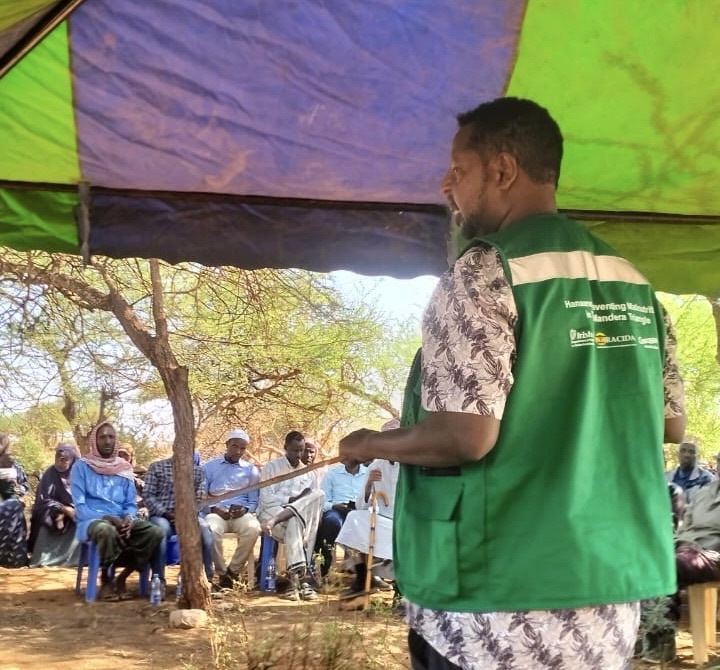
To prevent these tensions from escalating, RACIDA in partnership with Concern Worldwide through the Hanaano Programme and in close collaboration with local government departments and Natural Resource Management (NRM) committees on both sides, convened a cross-border coordination meeting last week. It was a gathering deeply rooted in the programme’s wider mission, strengthening community resilience, promoting peaceful coexistence, and ensuring that natural resources are managed sustainably amidst worsening climate shocks.
Building Consensus in a Time of Scarcity
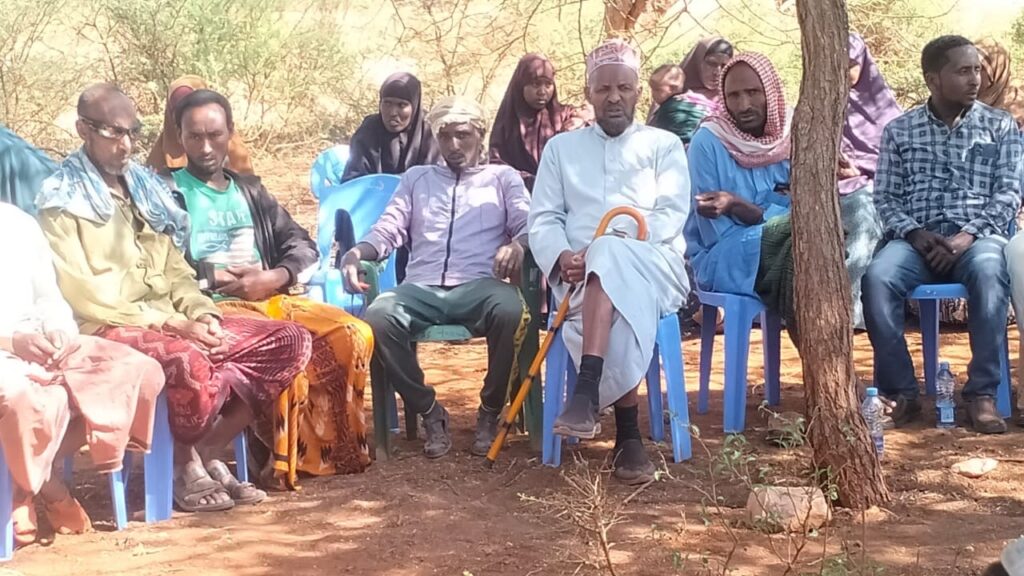
The dialogue brought together elders, NRM teams, peace committees, local administrators, and women and youth representatives from both Malkamari (Kenya) and Mubarak (Ethiopia). For hours, they discussed the challenges of drought migration, the pressure on shared grazing lands, and the increasing risk of conflict as communities moved with their herds.
A key agreement was reached: livestock movement across the border would be allowed, recognizing the lifesaving nature of mobility during drought. However, motorbike movement would be restricted, except for registered motorbikes used to transport milk and essential commodities. This decision followed assessments that showed most previous cross-border crimes had been facilitated through unregistered motorbike riders. The exemption ensured that women, small traders, and households depending on milk sales for daily income would not be affected.
Shared Dialogue, Shared Destiny
Today, as leaders and elders gathered once again at the border, their message was unified: communities must work together to protect peace, conserve the environment, and safeguard shared resources. Discussions focused on:
Coordinated use of grazing reserves Joint surveillance to prevent environmental degradation Strengthening community-led early warning and response Reinforcing peace committees under the Hanaano Programme Promoting harmony to prevent disruptions in livelihoods and nutrition
These efforts directly complement the Hanaano Programme’s broader work in Mandera—supporting livelihoods, NRM structures, WASH systems, nutrition services, and gender-inclusive community processes across Mandera East, Mandera North, Banisa, and Kiliwaheri. Through such engagements, the programme continues to address the underlying drivers of vulnerability, while reinforcing community cohesion in the Mandera Triangle.
Strengthening Nutrition and Resilience Across Borders
With drought conditions threatening food security and increasing the risk of child wasting, peaceful cross-border collaboration has become more critical. Access to grazing improves livestock health, which in turn ensures better milk production. By reducing conflict and securing pastoral mobility, the Hanaano Programme contributes to preventing wasting and improving household nutrition outcomes.
As the dialogue concluded, elders from both sides emphasized a shared truth: “Drought does not know borders, and neither should peace.”
Through continued dialogue, coordinated action, and strengthened resilience systems, communities in Malkamari and Mubarak are charting a safer, more sustainable path forward, together.
To stay updated on our programmes and impact stories, visit www.racida.org