How Bulla Hagar Restored Its Water Lifeline
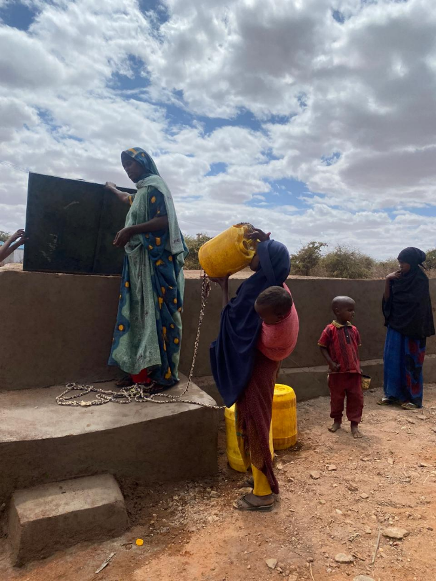
For families in Bulla Hagar in Wajir West,Kenya, water is more than a daily necessity. It is closely connected to health, nutrition, livelihoods and the wellbeing of the entire community.
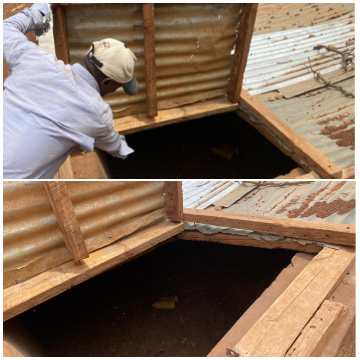
But after the 2023 El Niño floods damaged the community’s underground water tank, access to water became increasingly difficult.
The damaged tank could no longer provide the storage capacity the community depended on. Families were forced to turn to water vendors or travel to neighbouring communities to fetch water, often using donkey carts. At around KES 50 for a 20-litre jerrycan, the cost placed an additional burden on households already affected by drought and food insecurity.
For women and girls, who often carry the responsibility of ensuring water is available at home, the impact was particularly significant.
Yet Bulla Hagar was not without solutions.
A community with strengths to build on
The community already had established leadership structures, local knowledge and organised groups. Among them was the Bulla Hagar women’s group, whose members were actively engaged in improving the wellbeing of their community.
Through RACIDA’s Support to Community-Led Response (SCLR) approach, community members were given an opportunity to reflect on their existing strengths, identify the challenges that mattered most to them and determine what they could do themselves.
Through community discussions and appreciative inquiry, the rehabilitation of the damaged water tank emerged as a shared priority.
For Marium Abdullahi, a member of the Bulla Hagar women’s group, the process represented a different way of responding to community challenges.
”Before RACIDA came in, the damaged water tank was a major concern for our community. We knew how important it was for our access to water, but we did not know how to mobilize the resources needed to repair it.
Through the Community discussions, we reflected on our strengths, identify the challenges that mattered most to us, and decide what we could do ourselves. We realized that although our resources were limited, we had the leadership, knowledge and willingness to take action.
RACIDA supported us to take the lead rather than solving the problem for us. Through the micro-grant, RACIDA contributed 80% of the financial resources, while our community group contributed the remaining 20%. We also received training on procurement, financial management and accountability, which strengthened our capacity to manage resources and take responsibility for implementing our initiative.
RACIDA listening to our priorities, strengthening our capacity and providing the support we needed to put our own solution into action. We identified the damaged water tank as a priority, contributed our own resources and worked together to address the challenge.
For me and the other women in our group, what we needed was to be trusted, supported and given the opportunity to take action.
This experience has strengthened our confidence and shown us that when communities are trusted and supported, they can use their own strengths and resources to respond to the challenges that matter most to them.”
Restoring water. Strengthening resilience.
The rehabilitation transformed the community’s access to water.
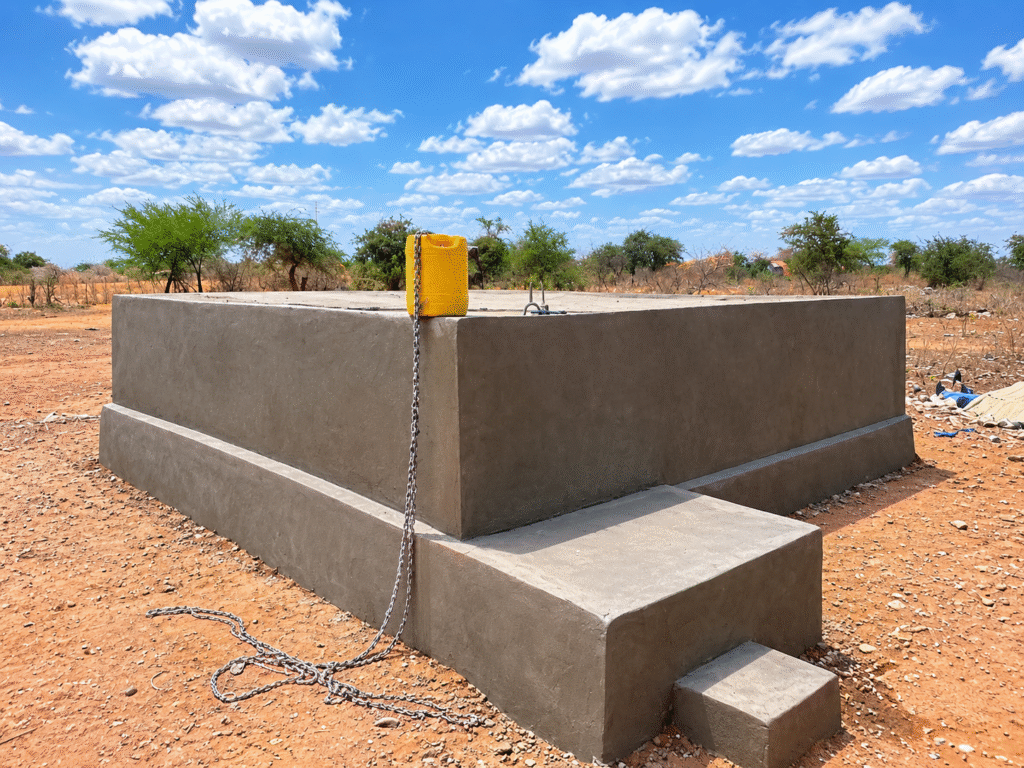
Approximately 325 households now have improved access to a more reliable community water source. The tank’s capacity was increased from 20,000 litres to 40,000 litres, doubling the amount of water the community can store.
The rehabilitation also made water more affordable.
Before the intervention, households paid approximately KES 50 for a 20-litre jerrycan. Following the rehabilitation, the cost reduced to approximately KES 20, helping ease the financial pressure on drought-affected families and reducing reliance on water transported from neighbouring communities.
But the most important change cannot be measured only in litres or Kenyan shillings.
It is the growing confidence of a community that has seen what it can achieve when its own knowledge, leadership and resources are recognised.
“The biggest change was not only that the tank was repaired. We learned that our community can identify its own priorities, bring together its strengths and work collectively to address challenges,” Marium said.
For the women involved, the experience also created greater confidence in their ability to influence decisions affecting their community.
“The women were involved in the discussions and decisions, and we saw that our ideas could lead to real change.”
More than a rehabilitated water tank
The Bulla Hagar experience demonstrates that locally led action is not simply about transferring responsibility to communities. It is about recognising the capacities that already exist and creating the conditions for those capacities to grow.
The community:
- Identified the damaged water tank as a priority based on its own needs.
- Built on an existing community asset rather than waiting for an externally designed solution.
- Mobilised its own resources through a 20% community contribution.
- Involved women and local leadership in decision-making and implementation.
- Strengthened its skills in procurement, financial management and accountability.
- Took greater ownership of protecting and maintaining the rehabilitated water facility.
RACIDA’s role was to facilitate, enable and strengthen this process, providing financial and technical support while allowing the community to remain in the lead.
A model of community-led change
Today, the rehabilitated tank provides more than increased water storage for Bulla Hagar. It stands as a reminder of what can happen when communities are trusted to define their own priorities and lead their own solutions.
For Marium and the women of Bulla Hagar, the experience has changed how they see their own role in responding to community challenges.
“For me and the other women in our group, what we needed was to be trusted, supported and given the opportunity to take action.”
Bulla Hagar’s story is therefore not only about a 20,000-litre increase in water storage or a KES 30 reduction in the cost of a 20-litre jerrycan. It is about agency, women’s leadership and collective action.It is about a community moving from waiting for a solution to identifying, mobilising and leading its own response.
That is the transformation at the heart of SCLR: moving from participation in externally designed interventions to communities defining and driving solutions that respond to the challenges that matter most to them.