Market-Responsive Skills Creating New Livelihoods in Somalia’s Borderlands
In Somalia’s borderland towns, the challenge is not simply that young people need jobs. It is that local economies often lack enough skilled people to meet the services communities already demand.
In Dollow and Beled-Hawa, this gap can mean households travelling across the border for services that are limited locally, while young people with the potential to provide those services struggle to find pathways into the market.
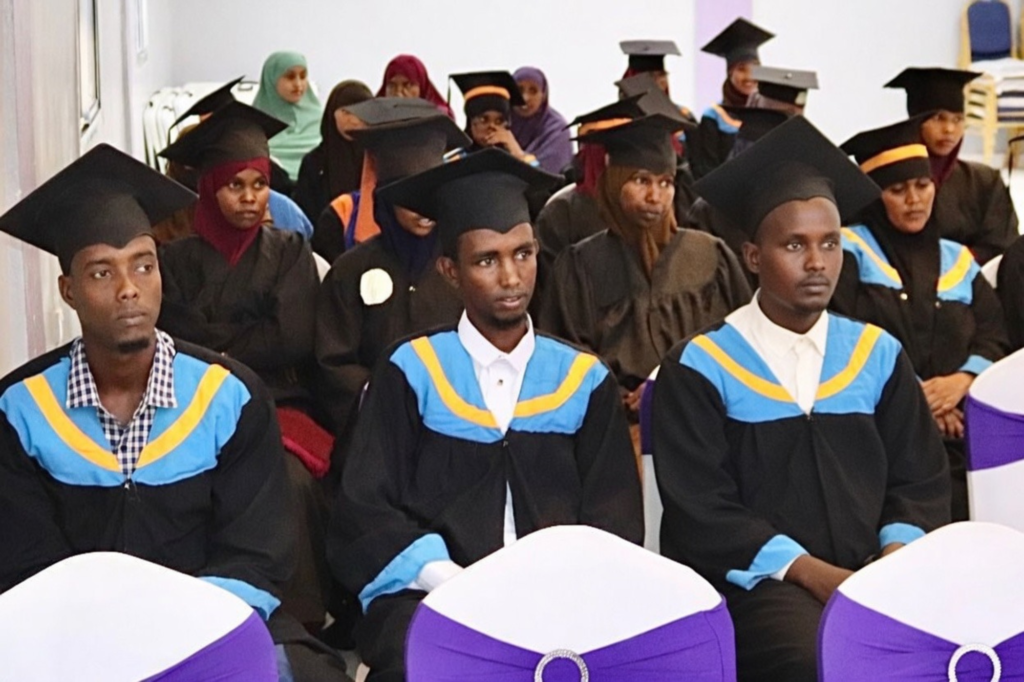
Through the EU-funded BORESHA-NABAD programme, implemented by RACIDA, 350 young women and men across Kenya, Somalia and Ethiopia have accessed market-responsive Technical and Vocational Education and Training (TVET), including 110 graduates from Dollow and Beled-Hawa. The training covers practical trades including electrical installation, plumbing, welding, solar installation, mechanics, tailoring, ICT, hospitality, beauty and bridal care. (Boresha)
The objective is not simply to produce more graduates. It is to connect skills with existing economic demand.
In Dollow, beauty and bridal services provide a clear example. Many women previously crossed into Dollo Ado, Ethiopia, to access specialised services—a sign that demand existed, but local supply was limited.
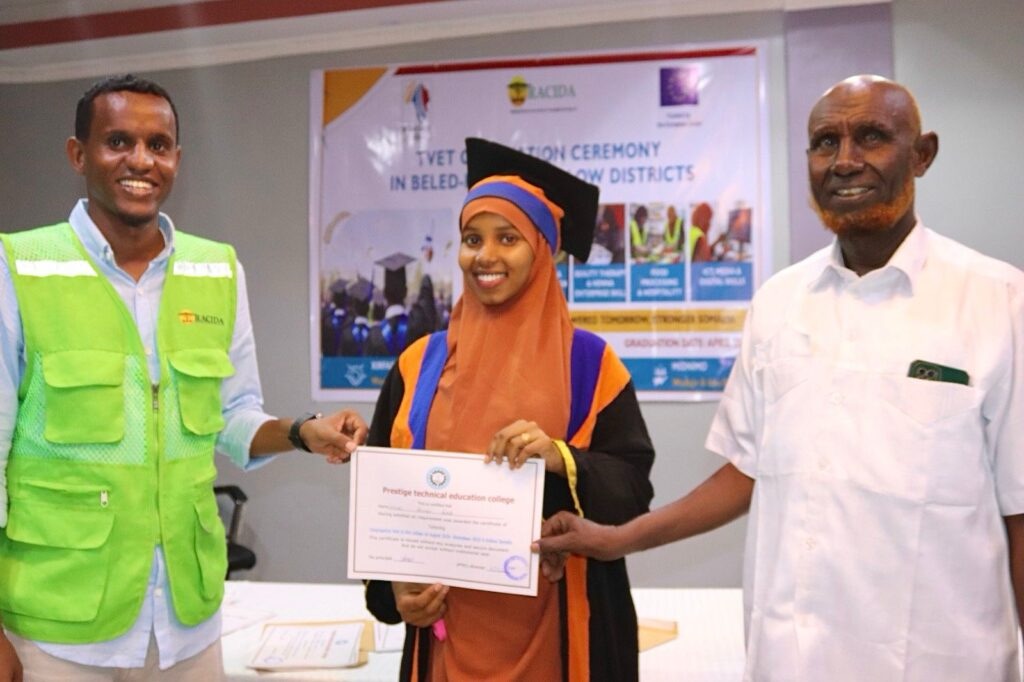
For Maryan Mohamed Abdi, a beauty and bridal care graduate, that gap has become an opportunity:
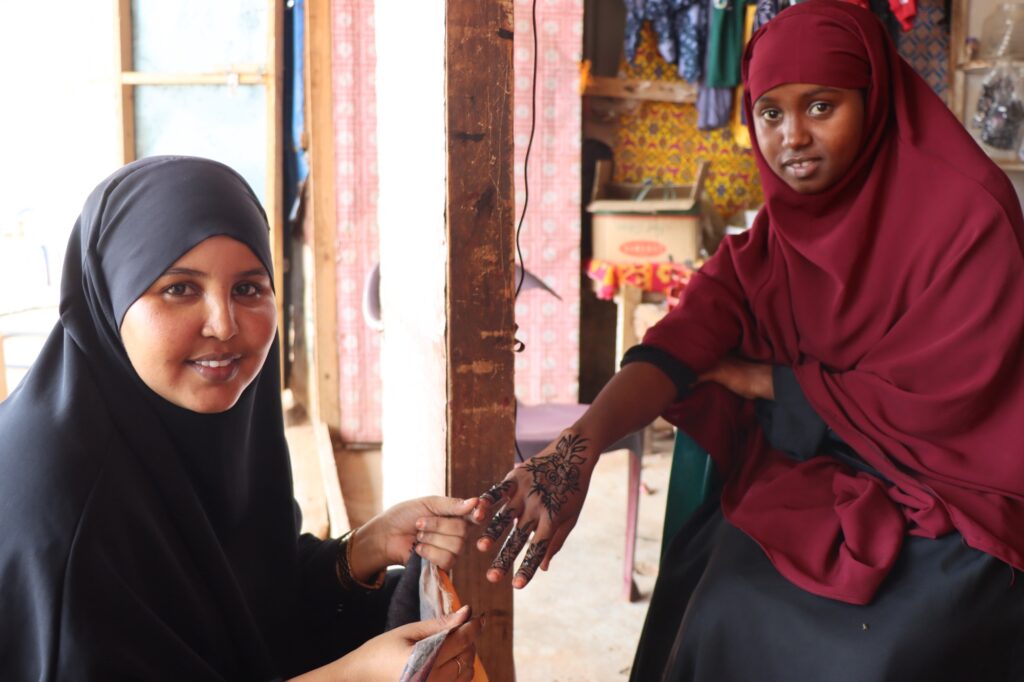
“Before the training, I only saw beauty work as something other people were doing across the border. Now I can serve clients here at home and earn from my own skills.” (Boresha)
The same principle applies across other trades. Electrical technicians, plumbers, mechanics, solar technicians, tailors and other skilled workers can fill everyday service gaps while creating pathways to self-employment and income.
As Mohamed Suleiman, another TVET graduate in Dollow, puts it:
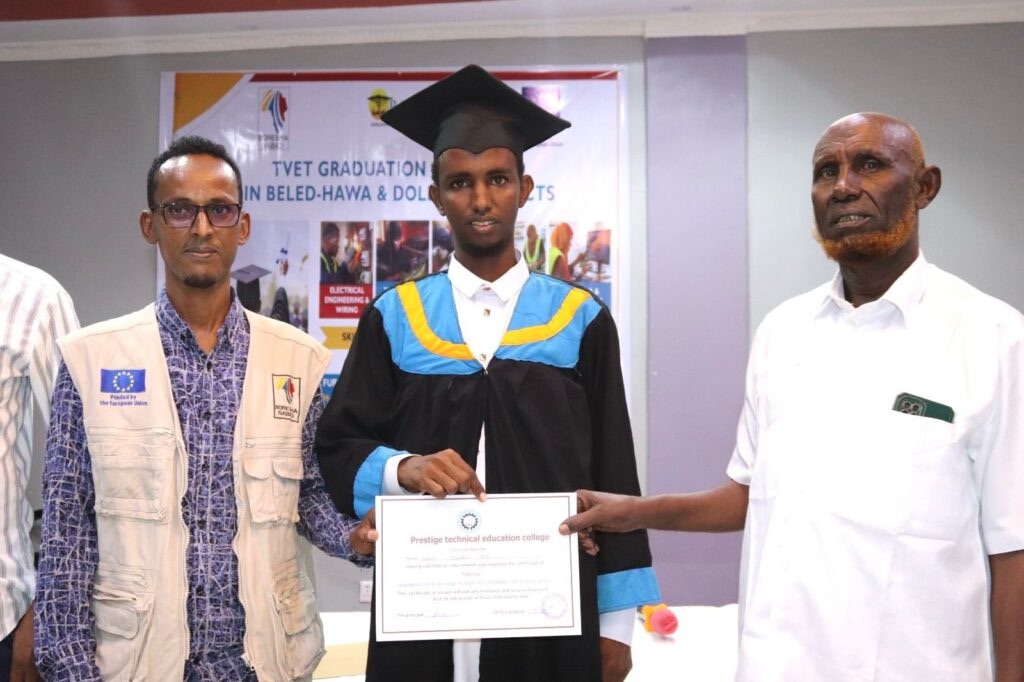
“The certificate gave me confidence, but the real value is that I can now use my hands to earn. People need these services, and we are now able to provide them.” (Boresha)
This is where the intervention moves beyond conventional skills training.
When local skills respond to local demand, livelihoods and markets can reinforce each other. Young people gain an entry point into economic activity, while households and businesses gain access to services closer to home.
The approach also creates space for women to participate more actively in local economies, particularly in sectors such as beauty, tailoring and hospitality where market opportunities can be developed around existing demand. BORESHA-NABAD’s wider experience shows that such pathways can move beyond training into entrepreneurship and employment. (Boresha)
For RACIDA, this is the value of a market-oriented approach: not creating parallel opportunities, but helping local economies work better by addressing gaps that already exist.
The longer-term test will be whether graduates build customer bases, secure employment, invest in their businesses and continue responding to market demand. These are the outcomes that can turn skills development into sustainable livelihoods.
In Somalia’s borderlands, closing the skills gap is therefore about more than training young people.
It is about enabling local talent to meet local demand—and turning that connection into economic opportunity.
Funded by the European Union through BORESHA-NABAD and implemented by RACIDA.