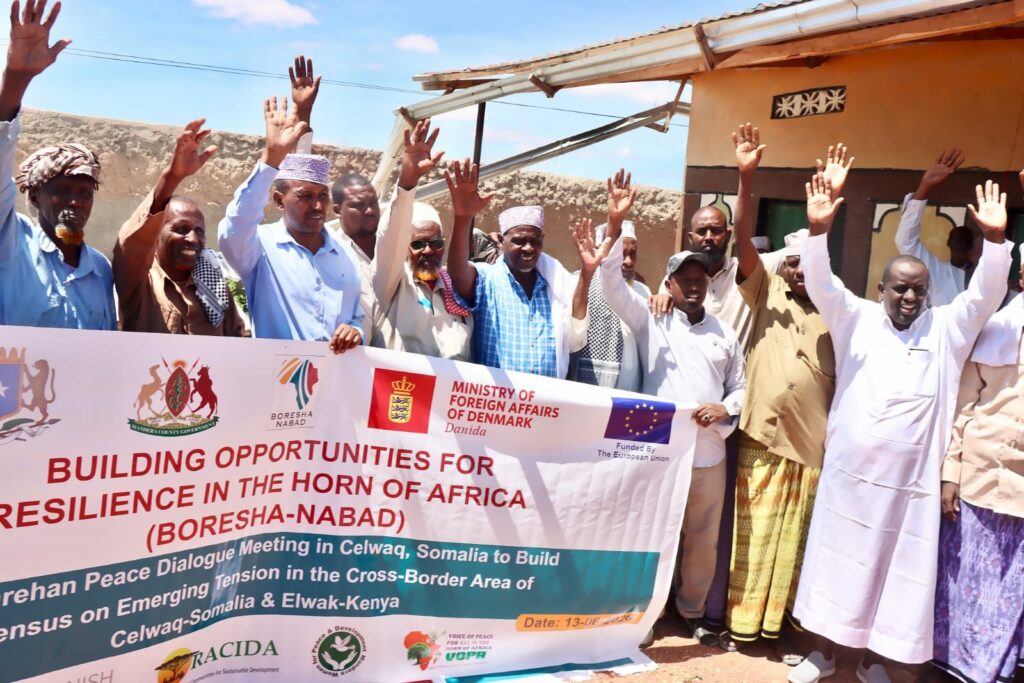
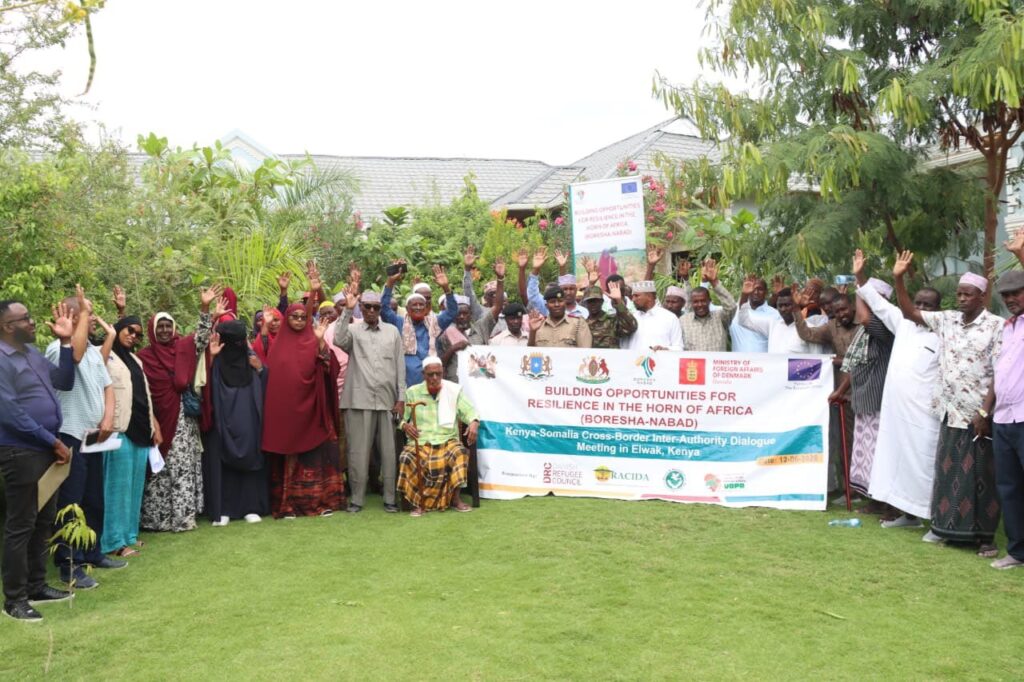
Elwak, Kenya / Celwaq, Somalia — BORESHA-NABAD this week convened a three-day cross-border peace dialogue bringing together the Garre and Marehan communities following recent clashes that claimed four lives and heightened tensions across the Kenya-Somalia border.
The dialogue, held in Elwak, Kenya and Celwaq, Somalia, was organized as part of ongoing efforts to prevent further escalation of conflict, restore social cohesion, and strengthen community-led peacebuilding mechanisms across the Mandera Triangle.
The engagement brought together elders, government authorities from Kenya and Somalia, religious leaders, women representatives, youth leaders, and local peace actors to discuss the underlying causes of the conflict and identify practical pathways towards sustainable peace.
Facilitated jointly by BORESHA-NABAD consortium partners RACIDA, DRC Kenya, VOPA NGO, and MWFPD, the dialogue provided a platform for open intra- and inter-community discussions, confidence building, and consensus on key issues affecting the two communities.
The dialogue resulted in several important resolutions, including:
- Immediate cessation of hostilities between the affected communities;
- Community-led identification of individuals responsible for the violence;
- Joint commitment by Kenyan and Somali authorities to pursue and apprehend the perpetrators;
- Agreement on blood compensation arrangements in line with community peace mechanisms;
- Restoration of calm and improved relations between the communities;
- Reopening of schools and the return of normal activities in previously affected villages;
- Establishment of a joint elders’ committee to spearhead the implementation and follow-up of agreed resolutions.
The successful outcome of the dialogue demonstrates the critical role of locally led peacebuilding initiatives in addressing emerging conflicts and strengthening social cohesion in fragile cross-border areas.
Through the support of the European Union and Danida, the BORESHA-NABAD Programme continues to promote inclusive and sustainable peace by empowering communities, local authorities, women, youth, elders, and peace structures to resolve disputes through dialogue, cooperation, and non-violent action.
As communities across the Mandera Triangle face increasing pressures from climate shocks, resource competition, and displacement, strengthening cross-border collaboration remains essential for building lasting peace, stability, and resilience.