In the drought- and conflict-affected displacement sites of Aligaiye in Dheka-Suftu District, Liban region vulnerable families continue to face immense challenges in meeting their basic needs. For many internally displaced persons (IDPs), daily life is marked by uncertainty, limited livelihood opportunities, and rising food prices that place additional pressure on already fragile households.
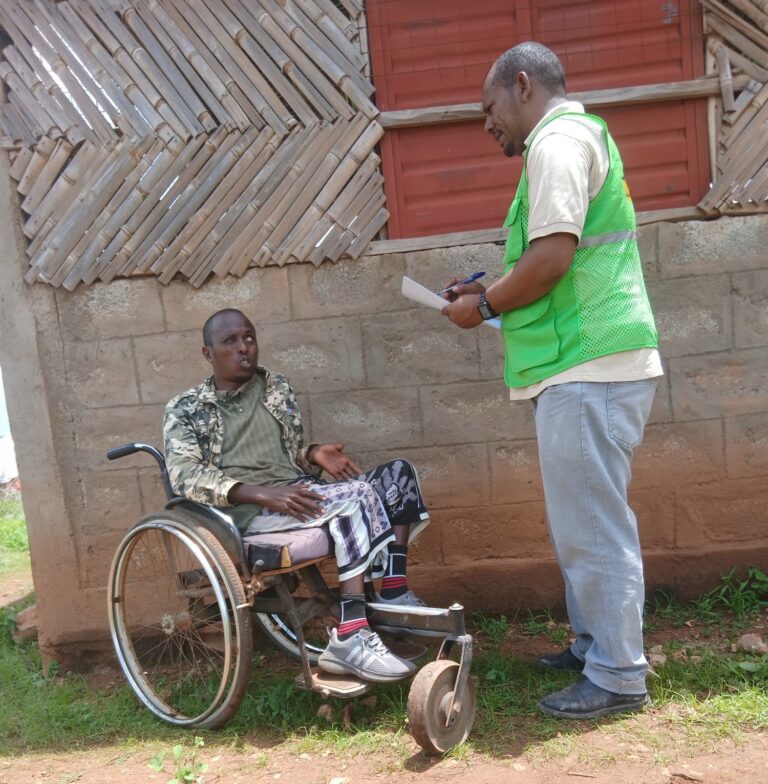
Among those affected is 43-year-old Mr. Abbey Maalim Yakub, a father of six living with a physical disability. Mr. Abbey was displaced from Bitata in the Oromia Region, Ethiopia five years ago due to tribal conflict. Since then, he and his family have struggled to rebuild their lives within the IDP settlement.
Living with a disability made it extremely difficult for Mr. Abbey to access income-generating opportunities or engage in labor work. As a result, the family relied heavily on occasional support from neighbors and well-wishers to survive. At times, the household could only afford one meal a day, while access to essential items such as food, medicine, and clean water remained a constant challenge.
Through the Stichting Vluchteling (SV)-supported unconditional cash assistance project implemented by RACIDA, Mr. Abbey was identified as one of the most vulnerable beneficiaries within the community. Through three consecutive cash transfers of ETB 7,658 each, he was able to prioritize and address his family’s most urgent needs with dignity and flexibility.
The cash assistance enabled the family to purchase essential food items including rice, flour, cooking oil, and sugar. Part of the support also helped cover transportation and medical expenses, improving access to healthcare services for the family.
Beyond addressing immediate household needs, the intervention significantly reduced stress and restored hope for the family during one of the most difficult periods of their lives.
Speaking about the impact of the support, Mr. Abbey shared:
“This cash support came at the right time when my family had nothing to eat. Because of my disability, I cannot work like others. The assistance helped me provide food for my children and restored hope in our lives.”
For vulnerable households like Mr. Abbey’s, unconditional cash assistance is more than emergency relief — it is a pathway to dignity, resilience, and recovery. By empowering families to make decisions based on their most pressing priorities, RACIDA continues to strengthen community resilience while ensuring that persons with disabilities and other marginalized groups are not left behind in humanitarian response efforts.
Through targeted humanitarian interventions, RACIDA remains committed to supporting crisis-affected communities with lifesaving assistance that restores hope, protects dignity, and enables vulnerable families to recover and rebuild their lives.