During this World Water Day, we focus on how strategic partnerships and donor investment in water infrastructure redefine life for rural communities.
In Farey Village, Mandera East, water comes at a high cost, measured in distance, risk, and lost opportunity.
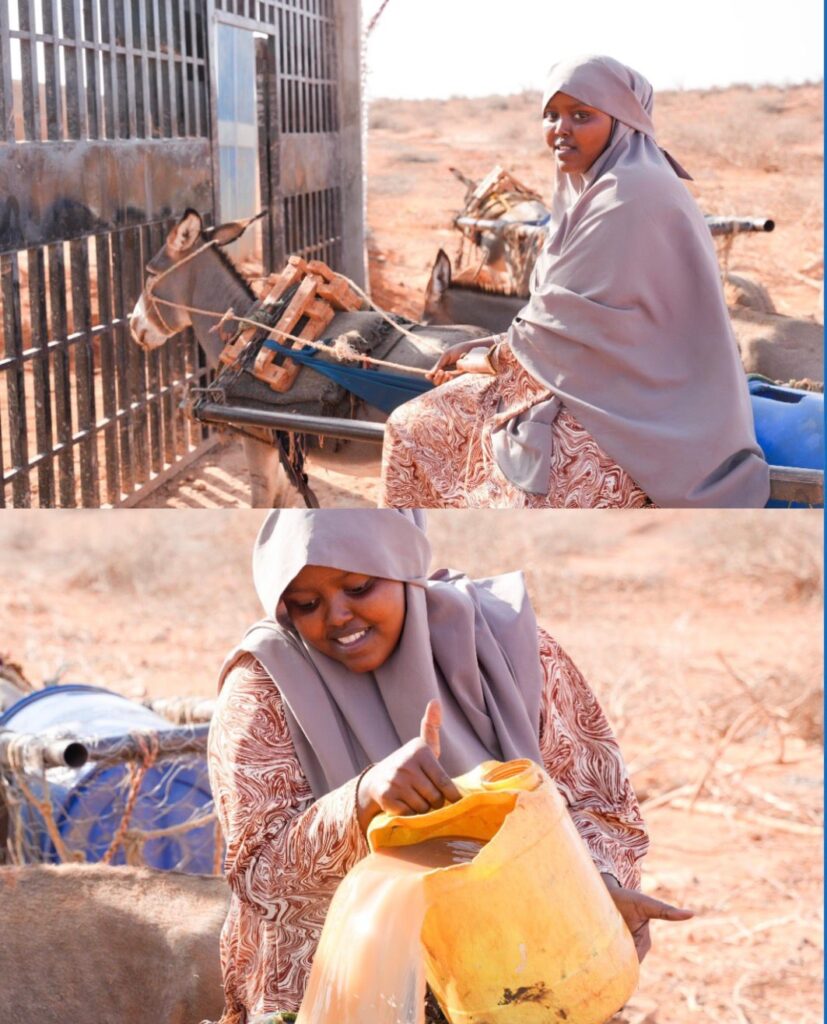
For Fatuma Abdi Bare, 22, the routine was relentless. As the eldest in a family of nine, she spent hours each day walking long distances to fetch water for her household and support her family’s small house. The burden was heavy, and the risks were real, limiting her ability to study, contribute economically, or simply rest.
That challenge has now been transformed.
Through the ELEVATE Project implemented by RACIDA, with support from IOM and funding from KOICA, a strategic investment in water infrastructure has redefined daily life in Farey. The rehabilitation and fencing of the village water storage facility, alongside the installation of a water kiosk and livestock watering point, have brought safe water closer, designed around community priorities.
The result is a clear shift from coping to progress:
• Time recovered: hours once spent walking are now invested in education and livelihoods
• Risk reduced: safer access points have minimized exposure to harm
• Income strengthened: women are engaging in productive activities
• Health improved: hygiene promotion and CLTS have elevated sanitation standards
This is more than access; it is efficiency, protection, and empowerment delivered through infrastructure.
“We no longer spend our days searching for water. Now we use that time to improve our lives,” Fatuma shares.
This reinforces a critical development principle:
proximity to water directly drives community resilience and economic participation.
Fatuma now looks ahead, not at the distance she must walk, but at the possibilities within reach. Her ambition is clear: a community where women are economically active, girls stay in school, and basic services enable, not limit, progress.
The ELEVATE Project’s intervention demonstrates that targeted WASH investments unlock multi-sectoral impact, delivering measurable gains across gender equality, livelihoods, health, and community stability.
Water access is not an output. It is a catalyst.