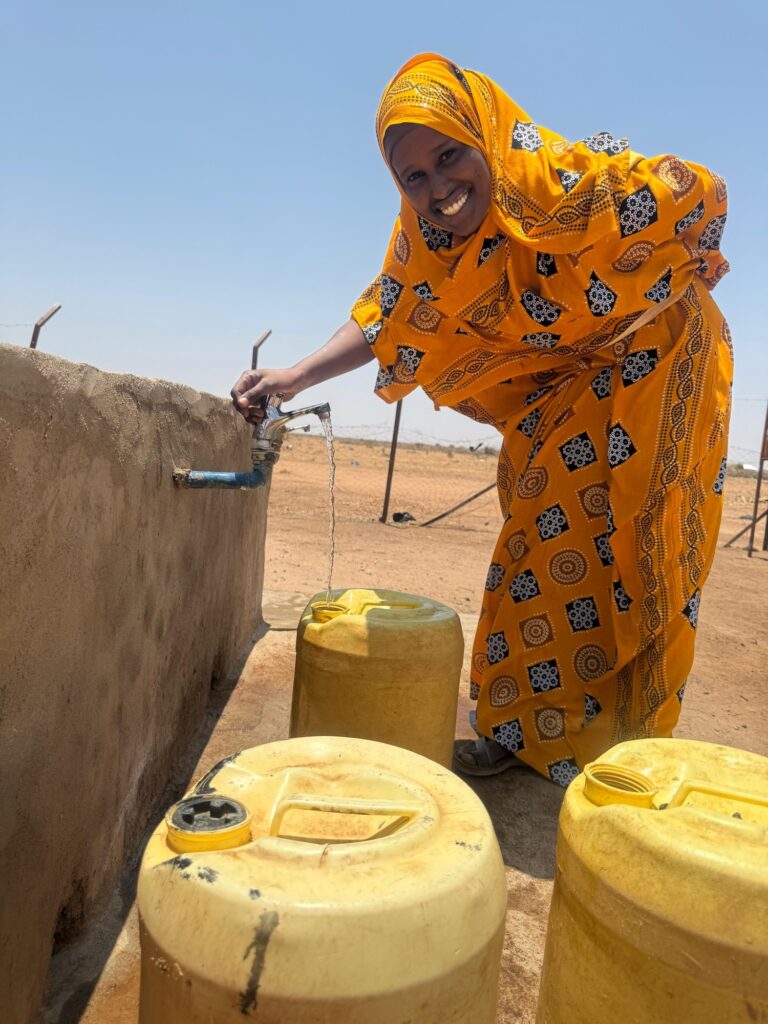
Rukia Noor Ibrahim smiles as she fetches clean water from the rehabilitated water kiosk in Gubadonle, Wajir, a symbol of resilience and community-led action through the SCLR initiative implemented by RACIDA with support from Diakonie Katastrophenhilfe (DKH.)
In the arid lands of Wajir County, access to clean and safe water has always been a challenge. For years, the residents of Gubadonle, a rural community with about 250 households, depended on a single borehole as their main source of water. When that borehole broke down, daily life became a struggle — forcing families to rely on unsafe and distant water sources shared with livestock.
Today, through the Support Community-Led Response (SCLR) initiative implemented by RACIDA and supported by Diakonie Katastrophenhilfe (DKH), this story has changed. The Gubadonle community now enjoys reliable access to clean water — a lifeline that has transformed health, safety, and livelihoods.
Community-Driven Solutions
Under the SCLR approach, communities take the lead in identifying and implementing solutions to their most pressing needs. In Gubadonle, residents came together and agreed that rehabilitating their broken water kiosk and restoring its piping system was the top priority.
With coordinated technical support from RACIDA and linkages to the Wajir County Department of Water, the community mobilized local labor and resources to make the project a success. Today, the rehabilitated water point serves over 1,800 people, bringing clean and safe water closer to their homes.
Rukia’s Story: From Unsafe Water to Hope
Among those whose lives have been transformed is Rukia Noor Ibrahim, a 28-year-old mother of eleven. Rukia lives with her husband, their five children, four orphaned nieces and nephews, and two elderly dependents. For her, the broken borehole meant walking three kilometers to fetch water from a dam, a risky and exhausting journey under the scorching sun.
“The dam water was all we had. When we cooked food or made tea, you could smell and even taste cow dung in it,” Rukia recalls. “But we had no other option, so we used it.”
The water, shared with livestock, was unsafe and caused health risks for families. Women like Rukia spent long hours fetching it, and there were fears of drowning and disease outbreaks.
When the borehole was repaired and the water kiosk rehabilitated, life changed dramatically. “Now I can easily access water without walking long distances. I even send my children to fetch water because it is safe. We no longer worry about dirty water or accidents at the dam,” she says with relief.
Restoring Dignity and Resilience
The rehabilitated water point has done more than provide clean water, it has restored dignity and opportunity to the people of Gubadonle. Families now have consistent access to clean water for drinking, cooking, and hygiene. Livestock are watered safely, and women have more time to engage in productive activities and community dialogues.
This initiative demonstrates how empowering communities to lead their own recovery and resilience efforts creates sustainable change. Through the SCLR approach, RACIDA continues to strengthen local ownership and resilience among agro-pastoral communities across northern Kenya and beyond.
About the Project
The Support Community-Led Response (SCLR) initiative, implemented by RACIDA and supported by Diakonie Katastrophenhilfe (DKH), enables communities to identify and address their most urgent priorities through locally led actions. In Wajir County, the project focuses on improving access to clean water, enhancing livelihoods, and promoting community resilience to drought and climate-related shocks.