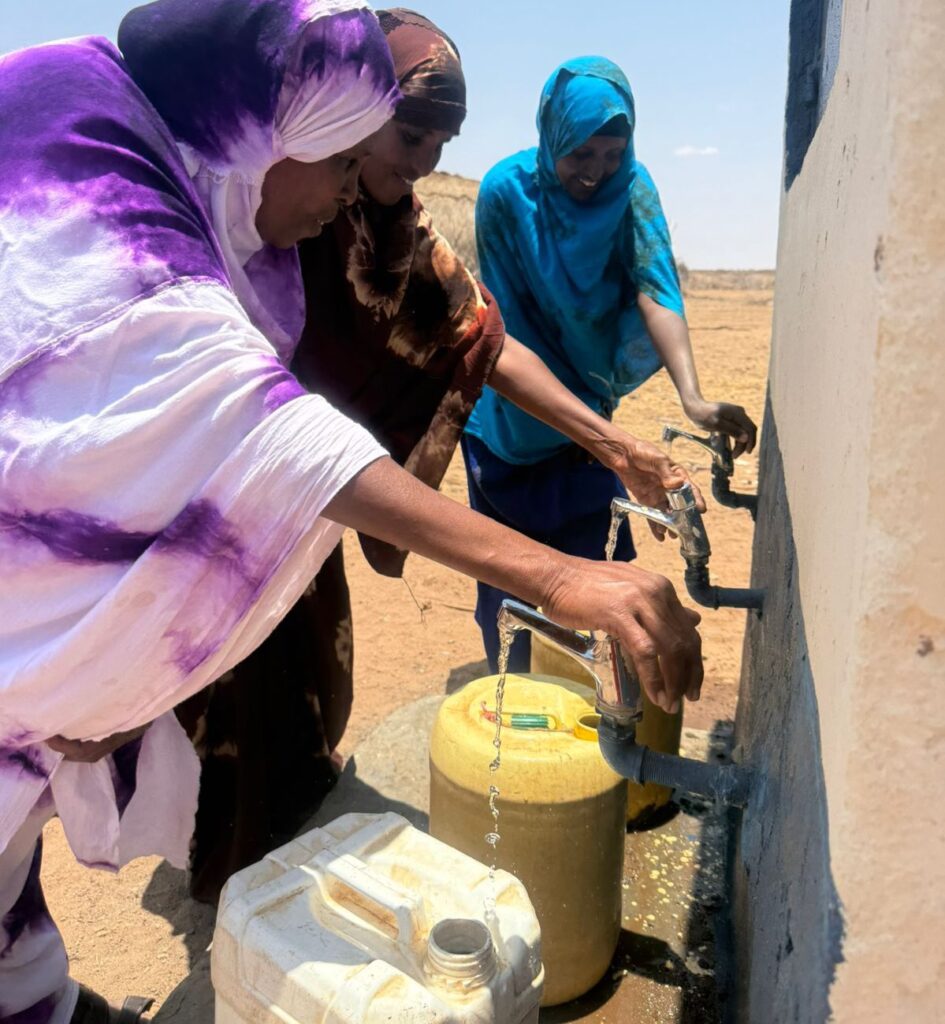
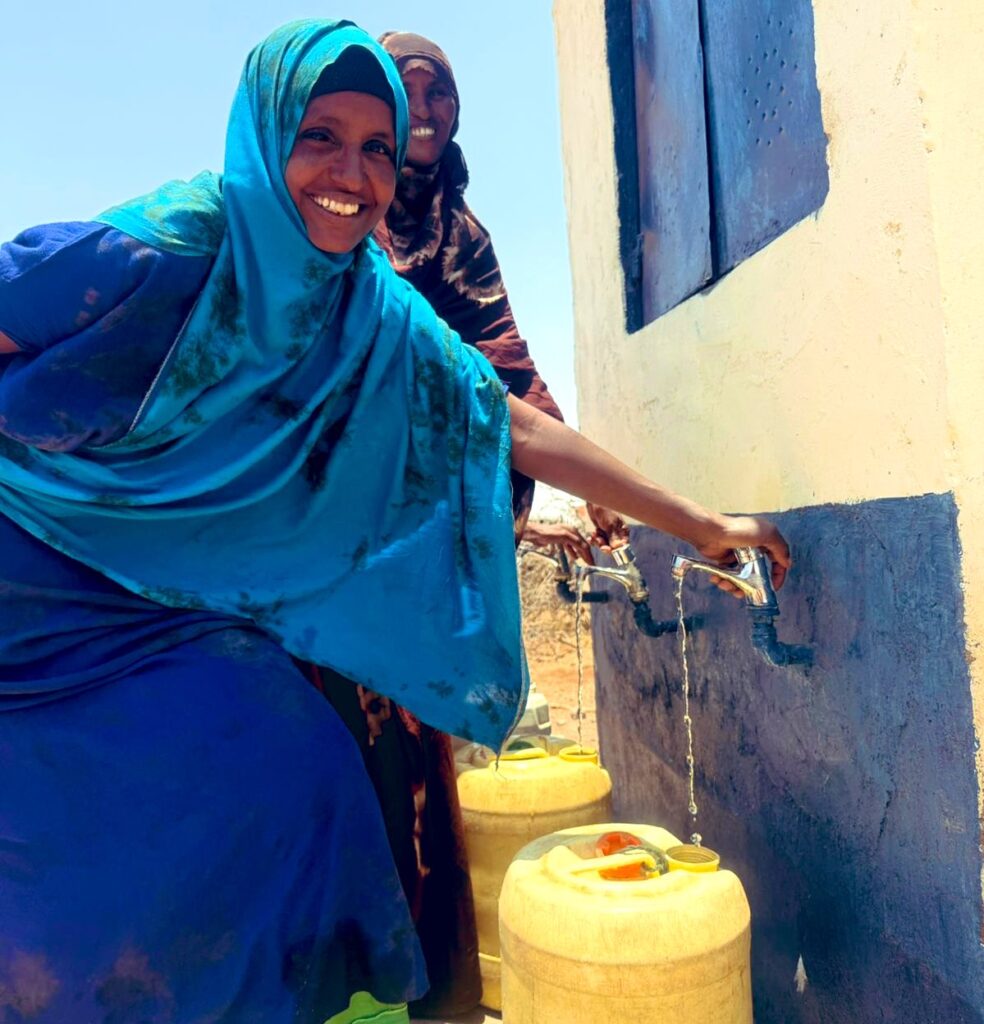
In the arid landscapes of Wajir West, access to clean and safe water has long been a daily challenge for many communities. For residents of Gubadonle village, this struggle often meant long treks under the scorching sun, carrying heavy jerrycans from distant water points that were frequently unreliable.
Through the Support Community-Led Response (SCLR) initiative, supported by Diakonie Katastrophenhilfe, RACIDA has been working alongside local communities to find sustainable, community-driven solutions to such challenges.
At the heart of this initiative is the Hodhan Women Group, a dedicated team of 10 women who came together with a shared vision: to bring clean, accessible water closer to home. With funding and technical support, the group successfully rehabilitated a community water kiosk and piping system, directly improving access to safe water for over 1,500 people.
From Scarcity to Sustainability
Before this project, the community’s water kiosk was non-functional due to broken pipes and outdated infrastructure. This forced residents to rely on unprotected water sources, increasing the risk of waterborne diseases and placing a heavy burden on women and children, who are traditionally responsible for fetching water.
“We used to walk for hours every day to fetch water, and even then, it was not always safe to drink. Children would miss school, and our livestock suffered during dry spells,” recalls Fatuma Ibrahim, a mother of four and member of the Hodhan Women Group.
“Now, with the rehabilitated water kiosk, clean water is right here in our village. It has changed our lives.”
The project didn’t stop at infrastructure improvements. RACIDA equipped the women’s group with critical financial management training and water resource management skills, ensuring they can maintain and manage the water point sustainably for years to come.
Building Local Leadership
The Hodhan Women Group’s effort has sparked a wave of empowerment in the community. By placing women at the forefront, the project has encouraged active participation in decision-making and fostered a sense of ownership among community members.
“This project has shown us that we, as women, have the power to lead and make lasting changes,” says Amina Hussein, the group’s chairperson.
A Ripple Effect of Positive Change
The benefits of the rehabilitated water kiosk go beyond hydration. With closer access to water:
- Children spend more time in school instead of walking long distances.
- Families save money previously spent on purchasing water.
- Livestock health has improved, strengthening household livelihoods.
- The risk of waterborne diseases has significantly decreased.
A Model for Sustainable Community Development
The success of the Gubadonle water project demonstrates the power of community-led initiatives in addressing local challenges. By investing in women’s leadership and local skills, RACIDA and its partners are helping communities move from vulnerability to resilience.
As drought and climate challenges continue to affect pastoralist regions like Wajir West, such initiatives provide a beacon of hope. The Gubadonle water project is more than just infrastructure—it is a symbol of empowerment, resilience, and lasting change.
About the Project
The Support Community-Led Response (SCLR) initiative, supported by Diakonie Katastrophenhilfe enables communities to design and implement solutions to their most pressing needs. By emphasizing local community and accountability, SCLR fosters sustainable development and strengthens community resilience against future shocks.