Did you know that global rates of exclusive breastfeeding in the first six months have risen to 48%? Yet for millions of mothers, especially in crisis-affected and underserved communities, this life-saving act remains a daily challenge. The barriers range from lack of privacy and inadequate public support to poor infrastructure, social stigma, and weak policies. This year’s World Breastfeeding Week (August 1–7), under the theme “Prioritize Breastfeeding: Create Sustainable Support Systems,” invites us to rethink breastfeeding as more than just a personal or maternal choice. It is a collective responsibility.
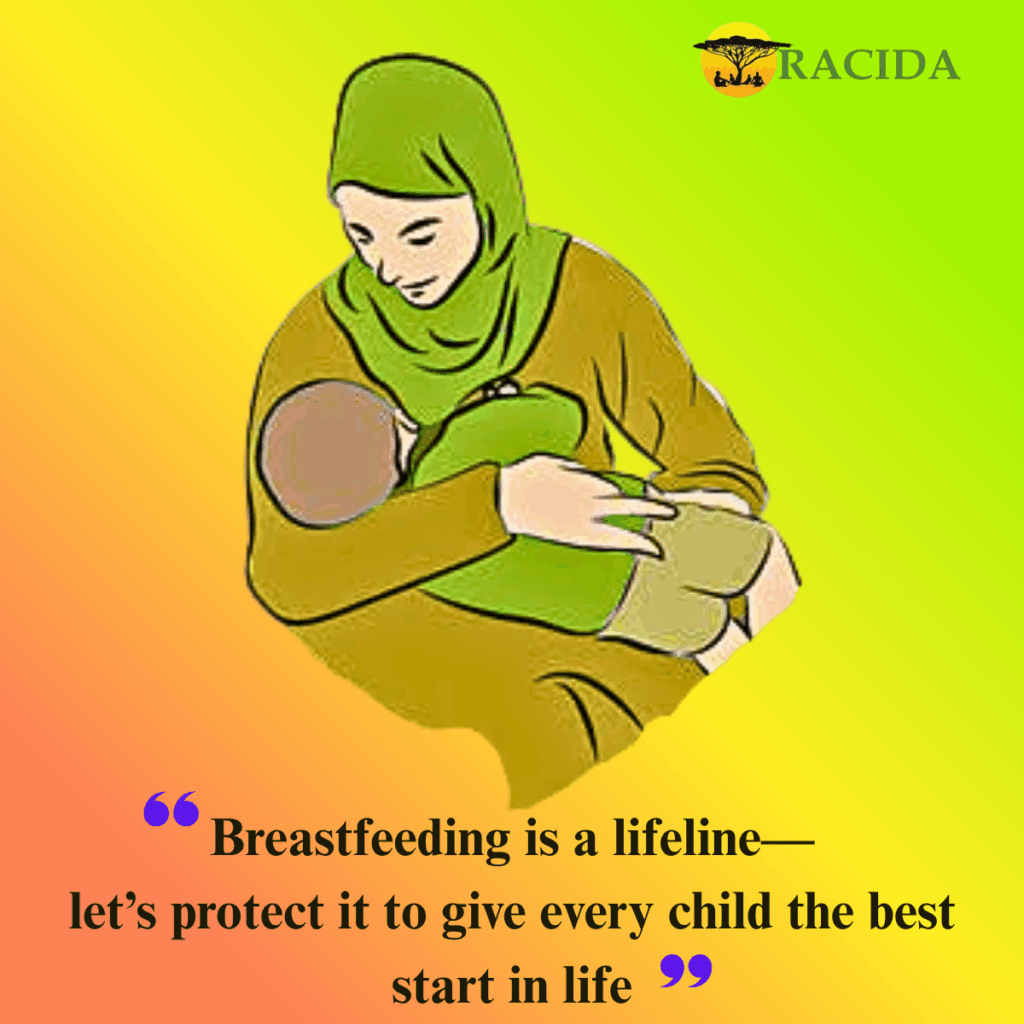
On 4th August 2025, the United Nations issued a renewed global call to action urging all governments, institutions, and communities to invest in policies and systems that support breastfeeding, especially in the first 1,000 days of life. The UN emphasized that breastfeeding is a human right, not only for mothers but for every child, and remains one of the most cost-effective interventions for preventing malnutrition and reducing child mortality.
Consider this: Breastfeeding is not something mothers should be left to do in isolation—finding corners in office spaces, buses, or under stairwells to nourish their children. It is the backbone of healthy communities. Breastmilk provides essential nutrients and immune protection that infants need to survive, especially in high-risk environments. Without it, children face increased chances of illness, malnutrition, and stunting. And stunting is not just about height—it is permanent damage to the brain, immune system, and lifelong potential. After age two, its effects cannot be reversed.
So what is Kenya doing to protect this vital resource?
The Breastfeeding Mothers Bill (2017), commonly known as the Breastfeeding Act, was a significant milestone. It mandates all employers to provide lactation rooms and reasonable breaks for breastfeeding mothers. However, enforcement has been weak, and awareness remains low. This week offers an ideal moment to spotlight and revive national attention toward making Kenya a breastfeeding-friendly nation—not just in law, but in practice.
Structural reforms matter, but so does everyday action.
· Fathers can normalize breastfeeding in the home, protect mothers’ time and space, and share other caregiving duties.
· Managers can ensure lactation rooms exist and create flexible return-to-work policies.
· Public transport operators can allow priority seating for nursing mothers.
· Public spaces can provide clean, comfortable, and safe breastfeeding zones.
· Media and influencers can shift public attitudes, making breastfeeding visible, normal, and respected.
· The average person can challenge stigma, offer support, and speak up when mothers are shamed or ignored.
In Kenya’s Mandera Triangle—where malnutrition rates remain among the highest nationally—grassroots action is underway. This year, the community of Neboi in Mandera County came together to commemorate World Breastfeeding Week 2025 in a powerful show of local solidarity. The event, held at Neboi Health Centre, was a joint effort of the County Government of Mandera, RACIDA, and Concern Worldwide, with support from Irish Aid through the Hanaano Program.
Speaking at the event, the County Executive Committee Member for Health emphasized that in Mandera, where Global Acute Malnutrition (GAM) remains at an alarming 20.6%, breastfeeding is a life-saving act—not a cultural nicety. The July 2024 SMART survey also reported 15.5% stunting and 19.7% underweight rates among children under five, reinforcing the urgency for sustained nutrition interventions.
Thanks to the Hanaano project, over 250,000 people have been reached with nutrition messaging, breastfeeding education, and peer support groups. Health data from April to June 2025 shows that Mandera recorded 2,600 SAM admissions and 5,300 MAM admissions, underscoring the continued burden on health systems.
But there are signs of hope: The same SMART survey found that 72.8% of children in Mandera are still being breastfed at age two, and 92.9% of infants aged 6–8 months had been introduced to appropriate complementary foods.
As the Assistant County Commissioner rightly said at the event, “Breastfeeding is a national investment in the country’s future.”
This World Breastfeeding Week, let us go beyond hashtags and posters. Let us create spaces, policies, and cultures that value and protect breastfeeding. Not for women alone, but for all of us.
Article contributors;
Ahmed Shakur : RACIDA
Shaloam Strooper: Concern Worldwide Kenya